An idea attributed to the economist Herbert Simon, writing decades ago at the dawn of the information age, has aged into something close to prophecy. A wealth of information, he observed, creates a poverty of something else: it consumes the attention of its recipients. When information becomes abundant, attention becomes scarce. The sentence sounds almost trivial. Follow it far enough and it explains a startling amount of the world we now live in.
This is a long argument for taking that idea seriously — not as a clever aphorism but as the organising fact of the age. Once you see attention as the genuinely scarce resource, a great deal that seems chaotic or merely annoying about modern life resolves into a clear and slightly unsettling logic.
The reversal of scarcity
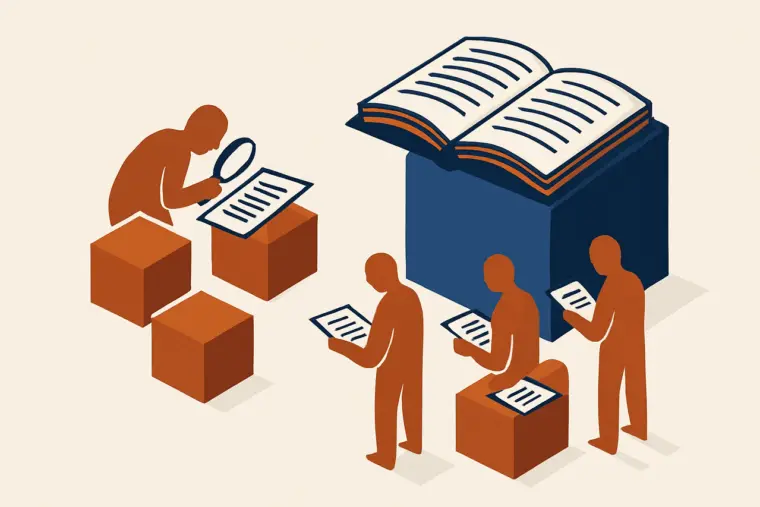
For most of human history, the constraint on knowing things was access. Information was expensive, slow and locked away — in scarce books, distant experts, guarded archives. Attention was relatively unconstrained; if you could get hold of something to read, you generally had the time and focus to read it. Scarcity lived on the supply side.
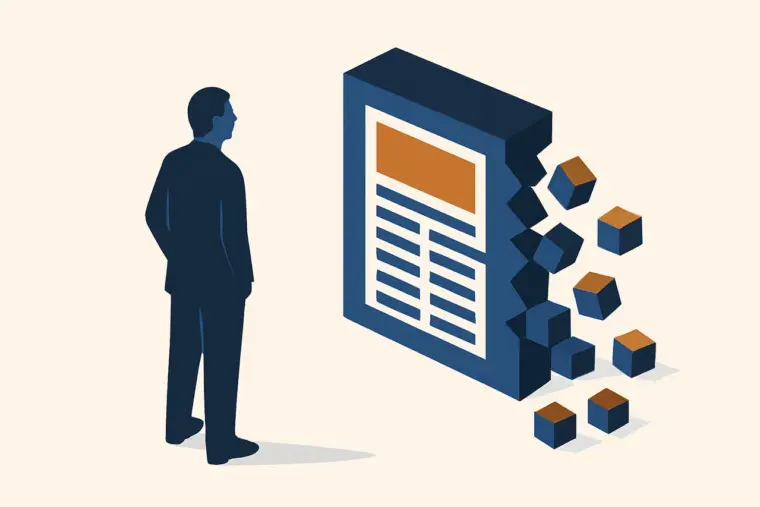
The digital revolution did not merely loosen that constraint. It detonated it. The marginal cost of producing and distributing a copy of information fell to essentially zero, and the supply of content became, for practical purposes, infinite. Anyone can publish; everything is searchable; the library is bottomless and open all night.
But the moment supply becomes effectively unlimited, the binding constraint moves elsewhere — and there is only one place for it to go. Human attention did not scale. We still have roughly the same finite hours, the same single channel of focus, the same biological limits on what we can absorb. Suddenly the scarce resource is not the information but the capacity to attend to it, and the economy reorganises itself, as economies do, around whatever has become scarce. Our technology coverage is, in large part, the story of that reorganisation.
When you are not the customer
The consequence that follows is the one that explains the most, and it begins with a simple question: if attention is now the scarce and therefore valuable resource, who is buying it?
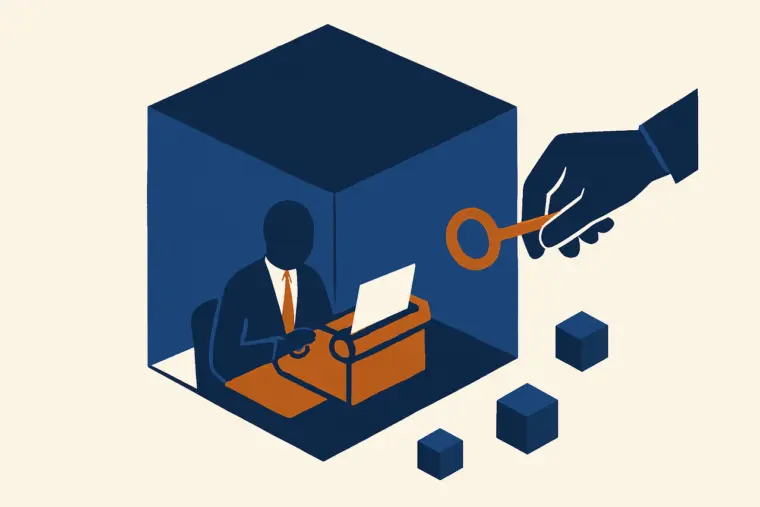
For a large share of the digital services people use every day, the answer is not the user. The service is free precisely because the user is not the customer. The customer is the advertiser, and the product is the user’s attention — captured, measured, segmented and auctioned. This is not a cynical reading; it is the stated business model of the largest platforms, whose public filings show revenue coming overwhelmingly from advertising.
This single fact inverts the incentives we instinctively assume are in place. We expect a product to succeed by being useful to us. But when our attention is the product, the system is not optimised to be useful at all. It is optimised to capture and hold our attention as long as possible, because that is what is being sold. Usefulness is incidental; engagement is the goal. And the two can diverge dramatically.
Research from organisations like the Pew Research Center has documented how thoroughly these engagement-optimised environments now mediate public life — how people encounter news, form impressions and spend their hours inside systems whose core objective is maximising time-on-platform. The Reuters Institute has shown the same pattern in news specifically: attention increasingly flows through feeds tuned for engagement rather than any deliberate editorial judgement about what matters.
What engagement optimises for
It is worth being precise about why “optimise for engagement” is not a neutral instruction. If a system learns, through relentless measurement, what holds human attention, it surfaces more of whatever does — and what reliably holds attention is not the same as what is true, useful or good for us.
The content that grips us tends to be emotionally activating: outrage, fear, novelty, conflict, the affirmation of what we already believe. A measured, accurate account of a complex situation is, on these metrics, a failure — it does not provoke, spread, or keep anyone scrolling. An inflammatory distortion of the same situation performs beautifully. Studies across several disciplines, including work published in journals such as Nature, have explored how novelty and emotional charge accelerate the spread of information, sometimes regardless of whether it is accurate.
The result is a quiet, structural bias in the modern information diet — not imposed by any single decision but emerging from millions of optimisations toward a metric that was never the same as truth. The system is not malfunctioning; it is doing exactly what it was built to do. The problem is what it was built to do. This is why our business and economy coverage treats the attention economy as a genuine market with genuine externalities, not a metaphor.
Attention as a resource to be defended
If attention is scarce and valuable, and if powerful systems are engineered to extract it, then the central skill of the age becomes the deliberate protection of one’s own attention. This is not a matter of willpower alone, any more than personal thrift is a complete answer to a predatory lending market. But it is where the individual response begins.
In practice it means treating attention the way a careful person treats money: as finite, worth budgeting, not handed over by default. It means noticing when a product is designed to be hard to put down, and asking who benefits. It means choosing, sometimes, the slower source precisely because the stimulating one has an agenda for your time. A growing body of guidance — including from the OECD on digital wellbeing — treats attention management as a genuine competency, not a personal quirk.
What comes next
The collective dimension is where the stakes become largest. A society in which attention is systematically harvested by whoever can most effectively provoke it is a society whose shared focus can be captured, fragmented and pointed wherever the highest bidder or the loudest signal chooses. Democratic life, which depends on a public capable of sustained, common attention to real problems, is not obviously compatible with an attention economy optimised against exactly that capacity.
The encouraging part is that scarcity, once named, can be managed; we have built institutions before to protect resources that markets alone would exhaust. The first step is simply to see attention clearly for what it has become — not a trivial thing we spend without thinking, but the scarce resource on which nearly everything else now depends. Information is free. Your attention is the price, and it is worth knowing who is collecting it — something we say more about on our about page.
Frequently Asked Questions
Why is attention considered scarce when information is abundant?
Information has become effectively unlimited while human attention remains finite. We still have roughly the same finite hours, the same single channel of focus, and the same biological limits on what we can absorb. Once the supply of information becomes essentially infinite, the binding constraint shifts to the capacity to attend to it.
What is the attention economy?
It is the reorganisation of economic activity around attention as the genuinely scarce resource. Many platforms monetise attention by maximising engagement, which can diverge sharply from what is true or good for users. This is the stated business model of the largest platforms.
Why are so many digital services free to use?
A service is often free precisely because the user is not the customer. The customer is the advertiser, and the product is the user's attention, which is captured, measured, segmented, and auctioned. The user's engagement is what is being sold rather than a subscription.
How did information go from scarce to abundant?
For most of history the constraint on knowing things was access, since information was expensive, slow, and locked away while attention was relatively unconstrained. The digital revolution drove the marginal cost of producing and distributing information to essentially zero, making supply effectively infinite and moving the scarcity to attention.