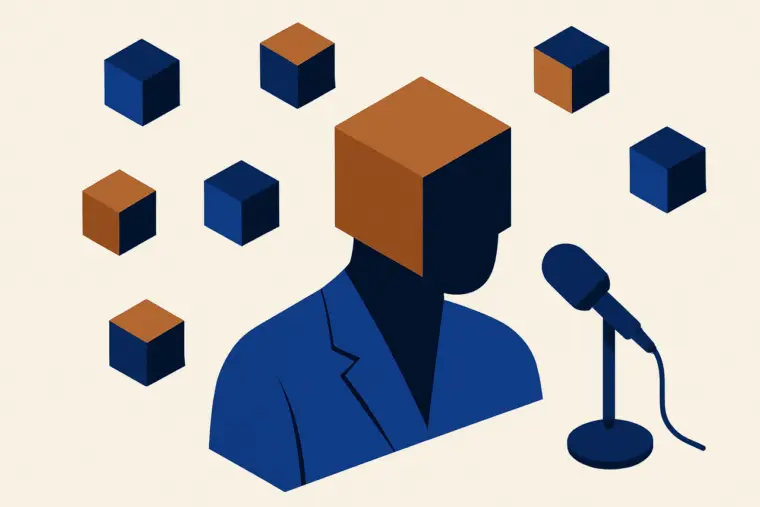
Trace almost any fact you believe back to its origin, and watch how far you get. A statistic you are confident about turns out to have come from a headline, which paraphrased an article, which summarised a press release, which described a study you have never seen and whose actual finding you could not state precisely. This is not a personal failing. It is the ordinary condition of knowing things in a world built on retelling. But it is worth noticing how strange it is — and how avoidable.
This column is in praise of an unglamorous habit: going to the primary source. The original document. The full dataset. The complete transcript rather than the quoted fragment. The paper itself rather than the news story about the paper. It is a small discipline that turns out to be one of the most powerful correctives available to anyone who wants to know what is actually true.
What a primary source is, and why the layers matter
A primary source is the original record: the court filing rather than the report about it, the peer-reviewed study rather than the summary, the official dataset rather than the chart someone made from it, the speech in full rather than the clip. Everything downstream — the news article, the explainer, the post, the conversation — is a secondary or tertiary source, a retelling at one or more removes.
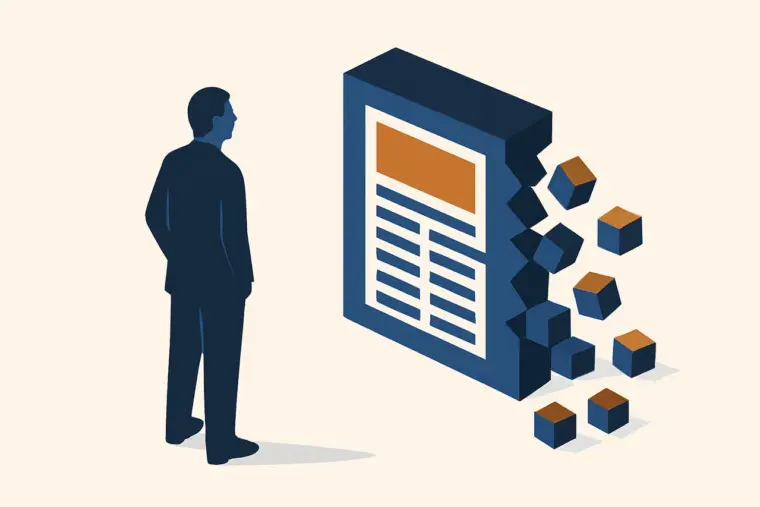
The trouble with retelling is not that anyone is necessarily lying. It is that each pass through a human introduces the possibility of distortion, and the distortions do not cancel out. A nuance is dropped to fit a word count. A qualified finding (“this association was observed in one population and may not generalise”) becomes an unqualified one (“scientists prove”). A range becomes a single number; a tentative result becomes a settled fact. By the time a claim reaches you at third hand, it can be the photographic negative of what the source actually said, with every intermediary having behaved more or less reasonably.
This is why the layers matter so much. Misinformation is often imagined as deliberate falsehood injected by bad actors. Far more of it is ordinary information degraded by transmission — true at the source, false by the time it arrives, with no villain anywhere in the chain.
The paradox of access
Here is what makes the present moment peculiar. Going to the primary source has never been easier, and going to the primary source has rarely been less common.
An astonishing amount of original material is now published openly. Scientific journals such as Nature increasingly make studies and their data available; international bodies like the World Health Organization post their reports and figures directly; projects like Our World in Data put the underlying datasets a click away from the charts built on them. Court documents, government statistics, full transcripts of public events — a great deal of what was once locked in archives is now searchable from a phone.
And yet the dominant mode of consuming information has moved in the opposite direction, toward ever-shorter summaries of summaries, optimised for speed and shareability. The gap between what is available and what is actually consulted has never been wider. We have the keys to the library and we read the posters in the lobby. Our science coverage tries, wherever possible, to link to the underlying study rather than only describe it — so a reader who wants the source can reach it.
What changes when you check
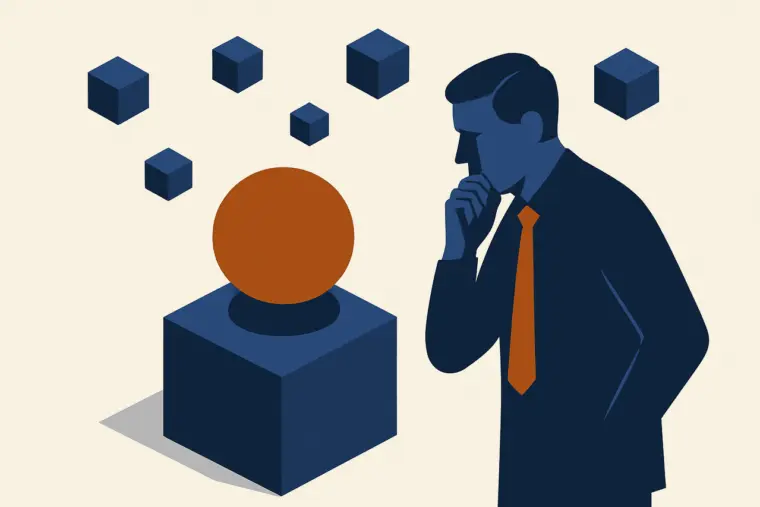
The practical payoff of the habit is larger than it sounds, and it shows up in a specific, repeatable experience. You read a striking claim. You feel the pull to accept it or to pass it on. Instead, you spend the few minutes it takes to find the original — and surprisingly often, the claim does not survive contact with its source.
The study said something narrower. The quote, in context, meant the opposite. The number was real but described a different thing entirely. The “report found” turned out to be a single line in a document that, read whole, pointed elsewhere. Fact-checking organisations such as the Poynter Institute have built an entire discipline on this, and their work shows the same pattern again and again: a great deal of confident misinformation collapses the moment anyone consults the source it claims to rest on.
Crucially, the habit also protects you when the claim does survive. Having seen the original, you now hold the fact with appropriate precision — you know its scope, its caveats, its limits — rather than the inflated, decontextualised version that was circulating. You are not just less often wrong. You are right in a more useful way. This is the same discipline that underlies our health coverage, where the gap between what a study found and what gets reported can have real consequences.
What’s at stake
The stakes of this small habit scale up to something large. An information environment in which almost no one checks the source is one in which a confident retelling can outrun the truth indefinitely, because nothing ever pulls it back to the original. The correction, if it comes, arrives at the bottom of a chain that no one is reading from the top.
None of us can trace everything to its source; there is not enough time, and most of life runs on reasonable trust. But the willingness to do it for the claims that matter — the ones we are about to act on, repeat, or build a belief around — is the difference between a public that knows things and one that merely passes them along. The source is almost always there now, waiting. The only question is whether we will go and look. You can read more about how we approach sourcing on our about page.
Frequently Asked Questions
What is a primary source?
A primary source is the original record behind a claim, such as the court filing rather than the report about it, the peer-reviewed study rather than a summary, or the full dataset rather than a chart made from it. Everything downstream is a secondary or tertiary source, a retelling at one or more removes.
Why does information get distorted as it is retold?
Each pass through a human introduces the possibility of distortion, and those distortions do not cancel out. A nuance is dropped to fit a word count, a qualified finding becomes an unqualified one, and a range becomes a single number, so a claim can arrive as the opposite of what the source said.
Is most misinformation deliberate?
Not usually. Far more misinformation is ordinary information degraded by transmission, true at the source but false by the time it arrives, with every intermediary behaving more or less reasonably and no villain anywhere in the chain.
Why is going to the primary source both easier and rarer now?
An astonishing amount of original material is now published openly, with journals and international bodies increasingly making studies and data available. Yet checking the source has rarely been less common, a paradox of access in a world built on retelling.