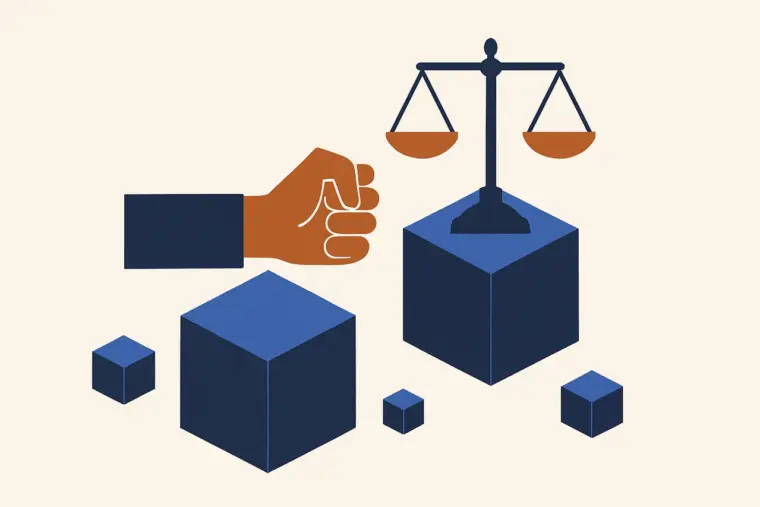
In systems that elect representatives from geographic districts, democracy has a hidden architecture: the map. Before a single vote is cast, the boundaries of electoral districts have already shaped what those votes can achieve. Redistricting — the redrawing of those boundaries — is among the most powerful and least understood levers in electoral politics. Done neutrally, it keeps representation fair as populations shift. Done strategically, it can hand one side a durable advantage that voters find nearly impossible to overturn at the ballot box.
The reason boundaries carry such weight is structural, and it applies wherever representatives are elected from single-member districts. In such systems, only the winner of each district takes the seat; everyone who voted for a losing candidate is, in seat terms, unrepresented. That feature makes the precise grouping of voters into districts decisive — and turns the act of drawing lines into an act of allocating power.
Why boundaries are redrawn at all
The legitimate purpose of redistricting is to keep representation roughly equal as populations move. People migrate — toward cities, between regions, across a country — and over time some districts swell while others empty. If boundaries never changed, a district with a small population would carry the same single voice in the legislature as one with many times the residents, violating the principle of equal representation captured in the phrase “one person, one vote.”
To prevent this, most district-based systems require periodic redrawing, typically following a national census that updates the population count. The census provides the authoritative data — in many countries published by a national statistical agency such as the Census Bureau — and the new maps are meant to equalise district populations. In principle, this is a technical, almost clerical exercise. In practice, because there are countless ways to draw lines that all satisfy the equal-population rule, the process is shot through with discretion — and discretion is where politics enters. This tension between technical necessity and political opportunity is a recurring theme in our elections coverage.
How the same votes produce different winners
The central insight of redistricting is that boundaries can change outcomes without changing a single vote. Because only district winners gain seats, how a party’s supporters are distributed across districts matters as much as how many there are. Concentrate them inefficiently and they “waste” votes; spread them efficiently and the same number of voters elects more representatives.
Partisan manipulation of this dynamic — gerrymandering — relies on two complementary techniques. “Packing” crams as many of the opposing party’s voters as possible into a small number of districts, so that those districts are won overwhelmingly but the opponents’ strength is confined and effectively wasted elsewhere. “Cracking” does the reverse, splitting a bloc of opposing voters across many districts so that they fall short of a majority in each and elect no one. Used together, packing and cracking can allow a party that wins a minority of the overall vote to control a majority of the seats.
The result is a system that can become strikingly unresponsive: maps drawn to entrench an advantage can make a large share of districts effectively uncompetitive, so that the real contest moves to party primaries and the general election becomes a formality. When the map predetermines the outcome, the link between shifting public opinion and shifting representation weakens — a distortion our analysis desk treats as a serious democratic problem, not a technicality.
Who holds the pen
If line-drawing confers power, the decisive question becomes who controls the process — and here democracies differ sharply. The most consequential design choice is whether boundaries are set by the politicians who benefit from them or by an independent body insulated from that conflict of interest.
Where elected partisans draw their own districts, the temptation to entrench advantage is obvious and the safeguards are weak; the people who win under a map have every incentive to preserve it. The widely recommended alternative, advocated by organisations such as International IDEA and the Electoral Reform Society, is an independent boundary commission — a non-partisan or cross-partisan body that draws maps according to neutral criteria such as equal population, geographic compactness, and respect for existing communities, rather than to political advantage.
Independent commissions are not a perfect cure; defining “fair” boundaries is genuinely contested, and even neutral criteria involve judgment. But removing the most direct conflict of interest — letting players referee their own game — tends to produce more competitive maps and more responsive legislatures. The choice between partisan control and independent administration is, in the end, a choice about whether representatives choose their voters or voters choose their representatives. The way institutional design quietly determines outcomes is exactly what our comparative coverage aims to surface.
What’s at stake: the responsiveness of democracy itself
Redistricting sits at the foundation of representative government in district-based systems, and its quiet importance is precisely what makes it dangerous to ignore. Fair maps keep the legislature responsive to a changing public; manipulated maps can lock in an outcome that survives shifts in opinion, insulating those in power from accountability for years at a time.
The deeper stakes concern the legitimacy of the entire system. When citizens come to believe that the map is rigged — that their vote has been pre-empted by where the lines were drawn — confidence in elections erodes, turnout can suffer, and the sense that government reflects the governed weakens. This is not an abstract worry; gerrymandering’s effects are measurable in the gap between a party’s share of votes and its share of seats, a metric tracked closely by bodies such as the Brennan Center for Justice.
The reassuring point is that this is a problem of design, and design can be changed. Independent commissions, transparent criteria, and judicial review of the most egregious maps all offer remedies. For citizens, the essential awareness is that the electoral map is not a neutral backdrop but a contested instrument of power — one worth watching as closely as the campaigns that play out upon it. Making that hidden architecture visible is part of the work of our newsroom at Cubed News.
Frequently Asked Questions
What is redistricting?
Redistricting is the redrawing of electoral district boundaries, normally done after a census, to keep district populations roughly equal. Because boundary placement affects how votes convert into seats, it can influence election outcomes independently of how people vote.
Why are electoral district boundaries redrawn?
The legitimate purpose is to keep representation roughly equal as populations shift over time through migration toward cities, between regions, or across a country. Without periodic redrawing, a sparsely populated district would carry the same single voice in the legislature as one with many times the residents, violating the principle of equal representation.
How can redistricting change election outcomes without changing votes?
In single-member-district systems, only the winner of each district takes the seat, so how a party's supporters are distributed across districts matters as much as how many there are. By grouping voters into districts in different ways, the same distribution of voters can be turned into very different distributions of seats.
Why does control of the redistricting process matter so much?
Because there are countless ways to draw lines that all satisfy the equal-population rule, the process leaves wide discretion, and that discretion is where politics enters. Whoever controls the map can, done strategically, hand one side a durable advantage that voters find hard to overturn at the ballot box.