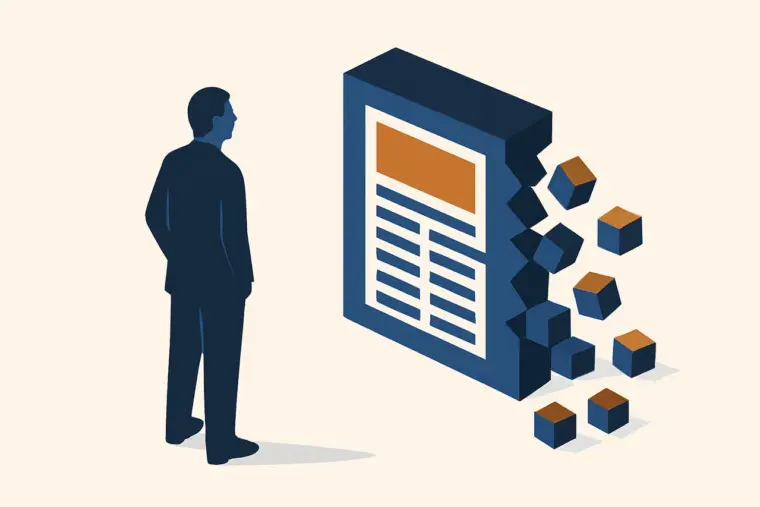
Few phrases in journalism do as much work, or invite as much suspicion, as “a source familiar with the matter.” To some readers it signals courage — a reporter protecting someone who took a risk to tell the truth. To others it signals exactly the opposite: an unnamed actor smuggling a claim into print without having to answer for it. Both readings are correct, depending on the case, and that ambiguity is precisely what makes anonymous sourcing one of the genuinely hard ethical problems of the trade.
This column does not argue that anonymity is good or bad. It argues that it is a powerful instrument with a sharp double edge, and that the entire ethical question lies in the discipline with which it is wielded. Used carelessly, it corrodes trust. Refused absolutely, it makes some of the most important journalism impossible. The work is in the judgement between.
Why the practice is necessary
Begin with the case for it, because it is strong and easily forgotten amid the abuses. There are truths that no one will tell you with their name attached, for reasons that are entirely rational.
The employee who knows their company is concealing a danger to the public; the official who can document that a government misled people; the worker who has seen abuse inside a powerful institution — these people often face severe consequences for speaking: dismissal, legal threats, ruin, in some places far worse. Organisations that defend journalists worldwide, such as the Committee to Protect Journalists, document the real and sometimes lethal risks faced by those who expose wrongdoing. To insist that such a person attach their name as the price of being heard is, very often, to guarantee that the public never learns what they know.
History makes the point plainly. A significant share of the journalism that has exposed serious wrongdoing — in business, in government, in institutions of every kind — depended on sources who would have stayed silent without the protection of anonymity. The shield is not a loophole in good reporting. For certain stories, it is the only thing that makes the reporting possible at all. Our politics coverage and the broader work of accountability journalism would be hollowed out without it.
Why it is so easily abused
And yet the very feature that makes anonymity valuable — freedom from accountability for the source — is what makes it dangerous. The shield that protects the brave whistleblower equally protects the self-interested manipulator, and from the outside the two can look identical.
Consider how the tool can be misused. An official floats a damaging claim about a rival, anonymously, to see how it lands, with no risk if it proves false. An organisation shapes a story in its favour through “sources” who are in fact its own representatives, never named, never accountable. A reporter, eager for a scoop, grants anonymity too readily and becomes a conduit for a leak that serves the leaker’s agenda far more than the public’s understanding.
In each case, the reader is asked to credit a claim while being denied the information needed to weigh it — who is speaking, and what they stand to gain. The Society of Professional Journalists’ Code of Ethics is direct on this point: journalists should identify sources whenever feasible, because the public is entitled to as much information as possible to judge a source’s reliability, and anonymity should be reserved for those who may face danger or retribution. Anonymity granted for mere convenience, or to add false drama, is a small betrayal of the reader every time.
The discipline that makes it defensible
If the practice is both necessary and hazardous, then everything depends on the rules a newsroom imposes on itself before granting the shield. Responsible outlets, and the ethical guidance offered by bodies such as the Poynter Institute, converge on a recognisable set of constraints.
Anonymity is a last resort, not a default — granted only when the information genuinely cannot be obtained on the record and is important enough to justify the cost. The reason for granting it is one the editors can articulate and would defend: real risk of retaliation, not the source’s mere preference to avoid scrutiny. The claim is corroborated, ideally through independent evidence or additional sources, rather than resting on a single unnamed voice. And, crucially, the source’s possible motive is weighed and, where possible, conveyed to the reader, so that “a former official with knowledge of the negotiations” comes with enough context to be assessed rather than simply believed.
This last element — telling the reader why a source is unnamed and what their angle might be — is the one most often skipped and the one that matters most for trust. The Reuters Institute’s research on news credibility suggests audiences are not naïve about anonymous sourcing; they discount it, sometimes heavily, when they are given no reason to do otherwise. A newsroom that explains its use of anonymity treats the reader as a partner in judgement rather than a recipient of assertions. We set out our own approach to sourcing on our about page, and apply the same standard to our business and economy reporting, where unnamed sources are common and motives are rarely simple.
What’s at stake
The stakes are the credibility of the whole enterprise. Every time anonymity is used responsibly — to protect someone genuinely at risk, for information genuinely in the public interest, with the reader given a reason — it earns a little trust. Every time it is used lazily or cynically, to launder a self-serving claim, it spends that trust down, and the next “source familiar with the matter” is believed a little less.
The goal is not to eliminate anonymous sourcing; that would silence truths that must be told. Nor is it to wave the practice through as a routine professional convenience; that turns a serious instrument into a habit. The goal is to make every grant of anonymity a deliberate, defensible decision — rare, reasoned, corroborated, and explained. The shield is real, and sometimes it is the only thing standing between a difficult truth and a public that would never otherwise hear it. That is exactly why it must never be handed out cheaply.
Frequently Asked Questions
When is it ethical to grant a source anonymity?
Anonymity is justified when a source faces genuine retaliation and the information is important and verifiable. Ethical practice grants it sparingly, for a stated reason, and explains to readers why a name is being withheld.
Why is anonymous sourcing sometimes necessary?
Some truths no one will tell with their name attached because speaking carries rational fears of dismissal, legal threats, ruin, or worse. Whistleblowers exposing concealed dangers, official deception, or institutional abuse often stay silent without the protection of anonymity, so much accountability journalism would be impossible without it.
How can anonymous sourcing be abused?
The very freedom from accountability that protects a brave whistleblower equally protects a self-interested manipulator, and from the outside the two can look identical. An official can float a claim or attack a rival under cover of anonymity without ever answering for it, smuggling a self-serving statement into print.
How should newsrooms handle anonymity responsibly?
The ethical question lies in the discipline with which anonymity is used. Responsible practice grants it sparingly rather than routinely, only for a genuine reason, and tells readers why a name is being withheld so the shield protects the vulnerable without shielding the self-interested.