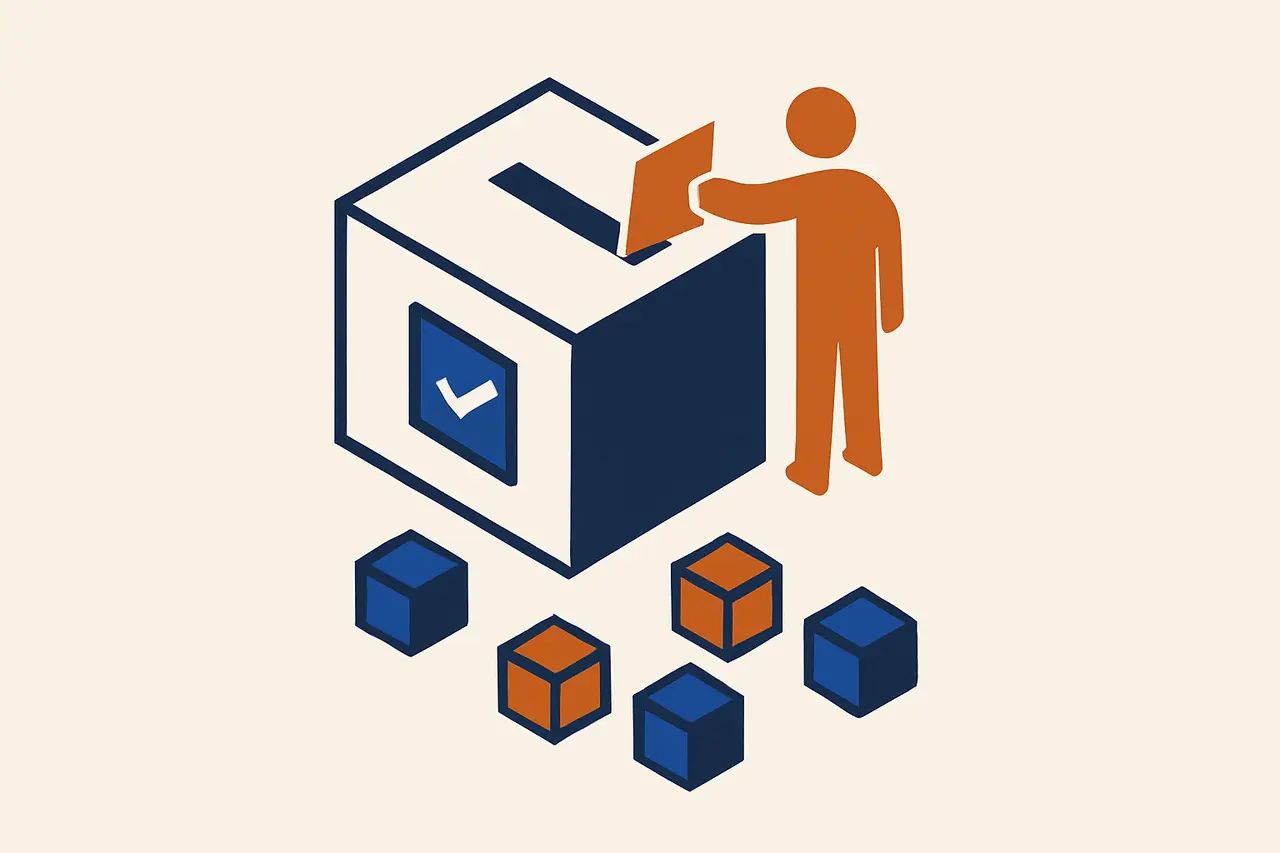
After every major election, a familiar ritual unfolds: the polls are arraigned, declared broken, and pronounced dead — until the next campaign, when they are consulted as obsessively as ever. The cycle reflects a basic misunderstanding of what a poll is. A poll is not a prediction. It is an estimate of opinion at a moment in time, produced by a chain of statistical judgments, each of which can go right or wrong. The interesting question is not whether polls are infallible — they plainly are not — but where their errors actually come from.
The popular intuition is that polling error is about sample size, the worry that “they only asked a few thousand people.” That is the part pollsters have most thoroughly solved. The real difficulties lie elsewhere, in judgments that no amount of mathematics can fully resolve.
The core method: a sample standing in for millions
The foundational idea of polling is genuinely powerful. If you select a sample of people at random from a population, the sample’s characteristics will, on average, resemble the population’s — and you can quantify how close. This is why a well-drawn sample of a couple of thousand respondents can estimate the views of an entire national electorate with surprising accuracy. Counterintuitively, beyond a certain point what matters is the size of the sample, not the size of the population it is drawn from.
In practice, perfectly random samples are unattainable, so pollsters reach respondents through phone calls, online panels, or text, then correct for the ways their raw sample differs from the electorate. This correction is called weighting: if a sample contains too few young people or too many graduates relative to known population figures, their responses are adjusted up or down so the weighted sample matches the demographic profile of the country. Census and official statistics — the kind published by national bodies such as the Office for National Statistics — provide the population benchmarks against which samples are corrected. The mechanics of this estimation are a recurring subject in our elections analysis.
Why “margin of error” understates the real uncertainty
Every reputable poll reports a margin of error — for a typical national sample, often around plus or minus three percentage points. The crucial thing to understand is what that figure does and does not cover. The margin of error measures only sampling error: the random variation that arises purely because you surveyed a sample rather than everyone. It assumes everything else is done perfectly.
It says nothing about the larger, non-random risks. It does not capture the possibility that the people who agreed to take the poll differ systematically from those who refused — a problem that has grown as response rates have fallen sharply over recent decades, documented extensively by bodies such as the Pew Research Center and AAPOR. It does not capture errors in how questions are worded, in which respondents are reached, or in the weighting assumptions. A poll can be well within its stated margin of error and still be meaningfully wrong, because the margin describes the smallest of the dangers. Treating it as the total uncertainty is one of the most common misreadings of polling — a confusion our analysis desk regularly tries to dispel.
The turnout problem: the judgment that decides everything
If there is a single source of polling’s most consequential misses, it is the turnout model. A poll of opinion must be converted into a poll of likely votes, and elections are decided not by what the whole adult population thinks but by what the subset who actually vote does. Estimating who will turn out is the hardest and most judgment-laden step in the entire process.
Pollsters build “likely voter” models to predict which respondents will really cast a ballot, using factors such as stated intention, past voting behaviour, and engagement. But turnout varies between elections, between groups, and in ways that are difficult to anticipate. If a model assumes a certain mix of voters and the real electorate that shows up looks different — older or younger, more or less drawn from particular regions or groups — the poll can be accurately measuring opinion while badly mis-estimating the result. Many of the most notorious polling “failures” were, at root, turnout-model failures rather than sampling failures.
This is also why differential non-response is so dangerous: if supporters of one party are systematically less willing to answer polls, and weighting does not fully correct for it, the error compounds with the turnout problem. These are not flaws that a bigger sample fixes; they are judgments about human behaviour under uncertainty. The difference between measuring opinion and predicting behaviour is precisely the kind of distinction our coverage of method and evidence insists on.
What’s at stake: reading polls without being fooled by them
None of this means polls are worthless — the opposite. A well-conducted poll remains the best available tool for gauging public opinion, far superior to anecdote, social-media impressions, or the size of a rally. The problem is not polling but the way polls are consumed: as precise forecasts of a single number rather than as estimates carrying real, often understated uncertainty.
The disciplined way to read a poll is to treat it as a snapshot of a range rather than a point. A result reported as a narrow lead is frequently, in truth, a statistical tie once the full uncertainty is acknowledged. A single poll should be weighed against the average of many, since outliers are inevitable and averages are more stable than any one survey. And the closer a contest, the more humility is warranted, because polling’s irreducible error is large relative to a tight margin.
The stakes are practical. Polls shape campaign strategy, media narratives, market expectations, and voter behaviour itself. When they are misread as certainties, the resulting surprise breeds distrust not just of pollsters but of expertise generally. Understanding polls for what they are — sophisticated, useful, and inherently uncertain estimates — is part of being a literate citizen in a data-saturated democracy, and a standing commitment of our newsroom at Cubed News.
Sources
Related from Politics
What Central Bank Independence Means for Democratic Politics
Independent central banks hold extraordinary power over economies while sitting outside the elected chain of command. The arrangement is one of the…
What Judicial Independence Means in Practice
An independent judiciary is named in nearly every constitution and honoured in far fewer. What separates a genuinely independent court from a…

How Diplomatic Recognition Works in International Relations
Whether an entity counts as a state, and whether a government counts as legitimate, is settled less by clear legal tests than…
Get Cubed News in your inbox
Daily premium coverage, free. Independent · Source-cited.