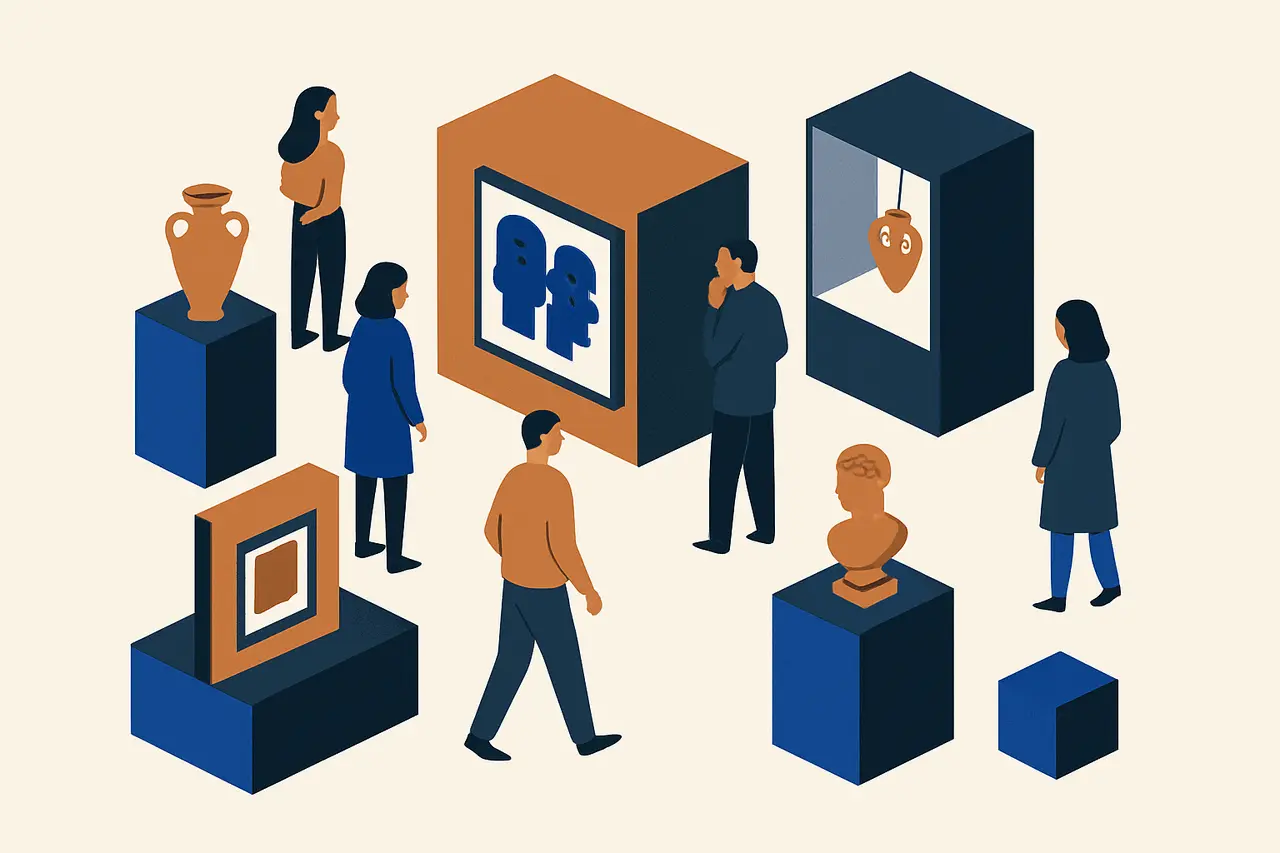
For most of their modern history, museums were easy to define. A museum collected objects, preserved them, studied them, and displayed them to the public. It was, in essence, a storehouse of the valuable and the rare, organised for viewing — a temple to the artefact. That definition held for well over a century, and it shaped everything from how galleries were arranged to who felt the buildings were meant for.
In recent years, that settled idea has come quietly undone. Museums around the world are rethinking not merely how they display things but what they are fundamentally for — and the rethink is significant enough that the profession has formally rewritten its own definition of the word. The museum of the coming decades is being reimagined as something more participatory, more accountable, and more woven into community life than the temple model ever allowed.
A new definition of the museum
The most concrete marker of this shift came in 2022, when the International Council of Museums (ICOM) — the leading global professional body — adopted a new official definition of a museum after years of debate. The traditional functions remained: a museum still collects, conserves, researches and exhibits. But the new definition added language that would have been unfamiliar a generation earlier, describing museums as institutions that operate ethically and professionally, foster inclusivity and diversity, and engage communities, offering varied experiences for education, reflection and knowledge-sharing.
The wording matters because definitions encode priorities. By formally elevating ethics, inclusivity and community participation alongside collecting and display, the profession signalled that the museum’s purpose is no longer understood as primarily custodial. The object is no longer the unquestioned centre; the relationship between the institution and the public has moved toward the heart of the mission. Our culture coverage has tracked how this reframing ripples through everything from exhibition design to who museums hire.
This is not a cosmetic change. It alters how exhibitions are conceived — with input from the communities a collection concerns rather than purely from curators — and it shifts the metric of success from the prestige of the holdings to the depth of public engagement and access.
Reckoning with where the objects came from
Part of what has forced this rethink is an unavoidable reckoning with the origins of collections. Many of the world’s great museums were filled during eras of empire, and a significant share of their holdings was acquired in circumstances that look very different through a contemporary ethical lens. In recent years, questions about the return of cultural objects to their places of origin have moved from the margins to the centre of museum debate.
UNESCO has long worked on the protection and restitution of cultural property, and the principle that significant cultural objects may rightfully belong with their communities of origin has gained considerable ground. Institutions such as the British Museum sit at the centre of some of the most prominent of these debates, which touch on questions of ownership, history, law and repair. Whatever one’s view of any specific case, the broader effect is clear: museums can no longer present their collections as neutral, apolitical assemblies of beautiful things. The provenance of the object has become part of the story the museum must tell, a theme that intersects with our world news coverage of how nations negotiate shared heritage.
This reckoning reinforces the larger redefinition. A custodial institution that simply holds and displays cannot easily address such questions; an institution that understands itself as ethical, accountable and in dialogue with communities is obliged to. The new self-understanding and the provenance debates are two sides of the same shift.
From temple to forum
The practical face of the change is a move from object-centred to visitor- and community-centred design. Wall labels that once assumed expert knowledge now explain and contextualise. Programming reaches beyond exhibitions into education, events, debate and partnership with local groups. Many museums have rethought admission and access, recognising that a collection means little if much of the public feels unwelcome or priced out. The aspiration is to function less as a temple, where visitors come to revere, and more as a forum, where they come to participate.
This carries real tensions. Scholars worry that a focus on engagement could come at the expense of rigour or preservation; communities ask whether participation is genuine or merely presentational; funding pressures complicate every choice. The redefinition does not resolve these tensions so much as commit museums to living with them honestly. It is harder to be a forum than a storehouse, because a forum has to answer to the people in it. The economics of sustaining such institutions also connect to our business and economy coverage of how cultural organisations fund themselves.
What’s at stake for public memory
Museums are among the most trusted public institutions in many societies, and they are powerful precisely because they shape how a culture remembers — what it chooses to keep, display and explain. How they define themselves therefore has consequences well beyond their walls. A museum that sees itself as a neutral storehouse tells one kind of story about the past; a museum that sees itself as an ethical, participatory civic space tells another.
The stake is the relationship between a society and its own history. The reinvention now underway is an attempt to make that relationship more honest, more inclusive and more alive — to turn institutions that once spoke to the public into ones that work with it. The transition is unfinished and contested, and it will look different from one country and collection to the next. But its direction is unmistakable: the museum is ceasing to be a temple to objects and becoming, slowly, a forum for the communities those objects belong to. For more on how we cover culture and ideas, see about Cubed News.
Sources
Related from Lifestyle & Culture

Slow Reading and the Quiet Economics of Attention
A growing movement urges readers to slow down, read deeply and read whole books. Behind it lies a sharp economic insight: in…
The Quiet Revival of Physical Media in a Streaming Age
Vinyl outsells CDs, independent bookshops are multiplying, and film photography is back. The return to objects you can hold is less nostalgia…

The Case for Boredom and the Lost Art of Deep Rest
We have nearly eliminated boredom by filling every idle moment with a screen. A growing body of thinking suggests we lost something…
Get Cubed News in your inbox
Daily premium coverage, free. Independent · Source-cited.