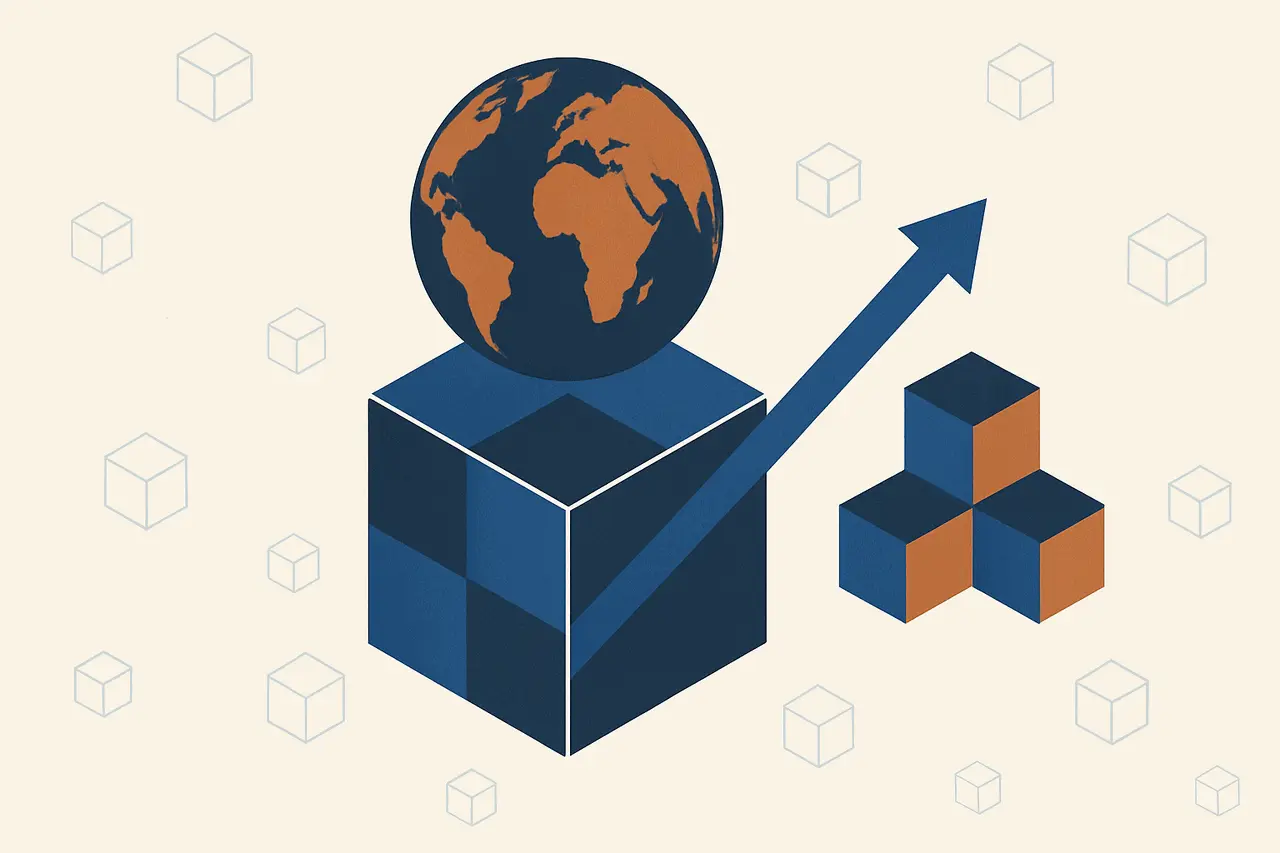
Few acronyms have travelled as far from their origins as BRICS. The term was coined in the early 2000s by an economist at an investment bank to describe a handful of large, fast-growing emerging markets — Brazil, Russia, India, and China — that he predicted would reshape the global economy. What began as a piece of financial shorthand has since become something its inventor never intended: an actual intergovernmental grouping, with summits, institutions, and an expanding membership of states seeking a louder voice in world affairs.
That evolution, and the bloc’s recent enlargement to take in new members, has prompted a wave of commentary about a shifting global order and the rise of a more “multipolar” world. Some of that commentary is overheated. To assess what BRICS expansion actually means, it helps to be precise about what the grouping is, what unites it, and — just as importantly — what divides it.
From acronym to bloc
The original four economies began meeting formally as a group in the late 2000s, and South Africa joined soon after, giving the grouping its familiar five-member form and the “S” in BRICS. Over time the bloc built modest institutions of its own, most notably a development bank intended to finance infrastructure and development in member and partner countries — an alternative, in part, to Western-led lenders.
More recently, BRICS has moved to enlarge, extending membership to additional emerging economies and drawing interest from many more. This expansion is the source of much of the current attention: a grouping that once spoke for five states now aspires to represent a broader swathe of the Global South.
It is important to be clear about what BRICS is not. It is not a military alliance like NATO, nor a single market like the EU, nor a treaty organisation with binding obligations. It is a coordinating forum — a club whose members consult, issue joint statements, and pursue selective cooperation. That looseness is fundamental to understanding both its appeal and its constraints, a theme our world coverage returns to with other emerging groupings.
What unites the members
If BRICS lacks a unifying treaty, what holds it together? Principally, a shared sense that the institutions governing the global economy and security order — bodies whose voting power and leadership have long reflected the post-1945 dominance of the United States and Western Europe — under-represent today’s emerging powers. Major economies that feel their weight is not matched by their influence in institutions like the IMF, the World Bank, and the UN Security Council have a common interest in pressing for reform.
This grievance is real and widely shared across the developing world. According to data from bodies such as the International Monetary Fund, emerging and developing economies now account for a very large and rising share of global output, yet their formal voice in legacy institutions has changed only gradually. BRICS gives these states a platform to articulate that case collectively.
Members also share an interest in practical hedges: developing alternative financing channels, exploring ways to trade and settle in their own currencies to reduce exposure to dollar-dominated systems, and diversifying partnerships so they are not dependent on any single power. These are pragmatic goals, pursued unevenly, rather than a unified ideological programme. Our economic-analysis coverage follows how such de-risking strategies play out across markets.
What divides them
For all the talk of a rising counterweight to the West, BRICS is constrained by deep internal diversity. Its members span democracies and authoritarian states, market economies and more state-directed ones, and — crucially — include powers that are themselves rivals. The relationship between the bloc’s two Asian giants, for instance, is marked by genuine strategic competition and unresolved disputes, which limits how closely the grouping can coordinate on hard security questions.
Members also have divergent, sometimes conflicting, foreign-policy orientations and economic interests. Some maintain close ties with the West even as they participate in BRICS; others are more confrontational. This means the bloc tends to find consensus on broad principles — reforming global governance, supporting development, defending sovereignty — while struggling to act as a unified force on specific, contentious issues.
The practical upshot is that BRICS is better understood as a coalition of the dissatisfied than as a coherent alliance with a single agenda. Enlargement may amplify its collective voice, but adding more diverse members also makes internal cohesion harder, not easier. Readers following our international-politics coverage will recognise this as a recurring tension in any large, heterogeneous grouping.
Reading the expansion honestly
So what does BRICS expansion actually signal? At minimum, it reflects a genuine and important trend: the gradual diffusion of economic weight away from a small set of Western powers toward a wider group of large emerging economies, and the desire of those economies for institutions that reflect that shift. That trend is real, well-documented, and consequential.
What the expansion does not yet represent is a unified bloc capable of supplanting existing global institutions or acting as a single geopolitical actor. The grouping’s internal divisions are too deep, and its structure too loose, for that. The more measured reading is that BRICS is one symptom — and one vehicle — of a broader move toward a more multipolar world, rather than the architect of a new order on its own.
What is at stake
The deeper stake behind BRICS expansion is the legitimacy and representativeness of global governance itself. If long-established institutions reform to give emerging economies a fairer share of influence, groupings like BRICS may serve mainly as pressure valves within a reformed system. If those institutions resist change, the appeal of building parallel structures will grow, gradually fragmenting global cooperation.
For the wider world, the rise of BRICS is best watched not as the birth of a rival superpower bloc but as a barometer of how the international order adapts to a changed distribution of economic power. For more on these shifts, explore our coverage and learn about Cubed News. The acronym that began on a banker’s spreadsheet has become a useful lens on one of the central questions of the era: who gets a say in running the world.
Sources
Related from World News
What ASEAN Is and How It Works
Ten Southeast Asian nations form one of the developing world's most durable regional blocs. Here is how ASEAN operates — through consensus,…
How the EU Single Market Works
The European Union's single market lets goods, services, capital, and people move across 27 countries as if borders barely existed. Here is…
The African Continental Free Trade Area Explained
AfCFTA aims to create the world's largest free-trade area by number of countries, knitting together 1.4 billion people across Africa. Here is…
Get Cubed News in your inbox
Daily premium coverage, free. Independent · Source-cited.