




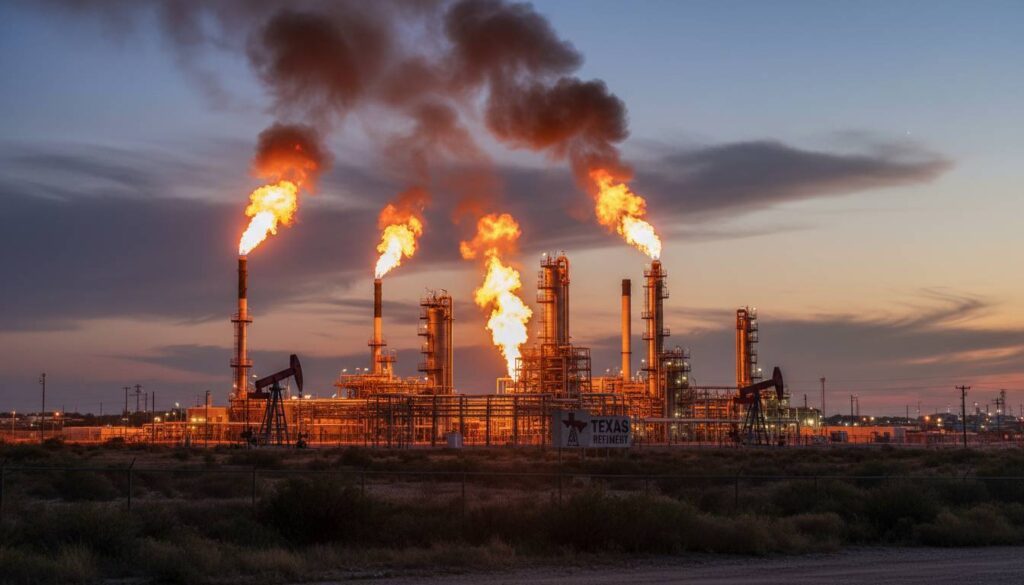
Texas Oil Refinery in Flames After Explosion Shocks Residents

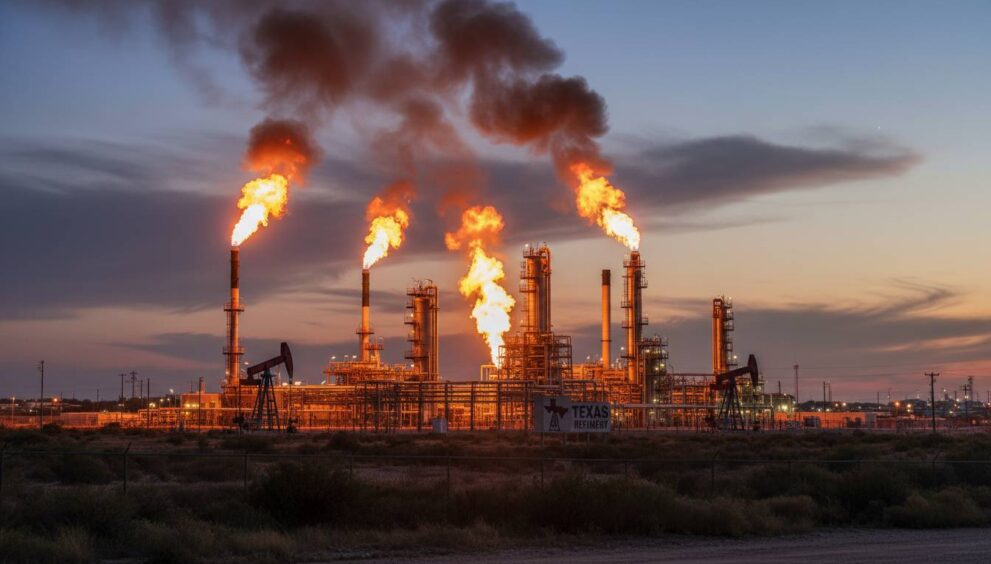
An explosion and refinery fire in Texas can trigger immediate concern over injuries, air quality, evacuations, and fuel supply, but the facts depend on the specific facility, operator, and official response timeline. Publicly documented refinery incidents in Texas over the past two years show how quickly local authorities, plant operators, and environmental agencies move to contain flames, assess emissions, and communicate risks to nearby residents. This article explains what is verified from recent Texas refinery fire cases, what agencies typically confirm first, and which facts readers should watch for in the first hours after an explosion.
🔴
Verified Texas refinery incidents show fast-moving emergency responses.
Phillips 66 said a fire at its Borger, Texas refinery began at about 11:20 a.m. on April 1, 2024, and was extinguished by 1 p.m., while AP reported two employees were injured. In a separate June 2025 Texas City refinery fire, local reporting said a shelter-in-place order was issued for nearby residents.
April 1, 2024 in Borger: 100 Minutes From Fire to Extinguishment
The clearest recent, fully verified Texas refinery fire case is the Phillips 66 incident in Borger, in the Texas Panhandle. According to the Associated Press, citing company statements and local emergency officials, the fire began at about 11:20 a.m. local time on April 1, 2024, and was extinguished by 1 p.m. the same day. Two employees were taken to a hospital, and Phillips 66 said the refinery continued to operate while the cause remained under investigation.
That timeline matters because it shows the first pattern readers should expect after a refinery explosion or fire: operators and local emergency management usually confirm whether all personnel are accounted for, whether the blaze is contained, and whether the plant remains operational. In Borger, the company’s first public facts focused on worker status and stabilization rather than detailed damage estimates. That is typical in the opening hours of an industrial incident.
Verified Texas Refinery Fire Cases in Public Reporting
| Facility | Date | Key Verified Facts | Immediate Public Impact |
|---|---|---|---|
| Phillips 66 Borger refinery | April 1, 2024 | Fire began about 11:20 a.m.; extinguished by 1 p.m.; two employees injured | Hospitalizations; cause under investigation |
| Marathon Texas City refinery | June 2025 | Fire prompted emergency response at refinery complex | Shelter-in-place order reported for nearby residents |
| Shell Deer Park refinery | May 5, 2023 | Explosion resulted in refinery fire | Industrial incident logged by NOAA |
Source: AP, NOAA incident records, public reporting | accessed March 24, 2026
Why Shelter-in-Place Orders Matter When Flames Rise Over a Refinery
For residents, the most urgent issue is often not the blast itself but the smoke plume. Public reporting on the June 2025 Marathon refinery fire in Texas City said nearby residents were placed under a shelter-in-place order. That response is significant because it indicates authorities saw at least a potential short-term air exposure risk, even before a full emissions profile was available.
In refinery incidents, shelter-in-place guidance usually arrives before a full explanation of what burned. Emergency managers may act on visible smoke, wind direction, and precautionary hazardous-material protocols. Readers should therefore separate two questions that often get blurred in early coverage: whether the fire is contained, and whether off-site air conditions are considered safe. Those are related, but they are not the same. The first is an operational milestone; the second depends on monitoring data and chemical assessment.
Texas Refinery Fire Timeline
May 5, 2023: NOAA logs an explosion and fire at the Shell Deer Park refinery in Deer Park, Texas, adding the event to federal incident records.
April 1, 2024: Phillips 66 reports a refinery fire in Borger, Texas; AP says two employees are injured and the fire is extinguished in roughly 100 minutes.
June 2025: Public reporting on a Marathon refinery fire in Texas City says nearby residents are told to shelter in place.
2005 Still Shapes Every Texas Refinery Explosion Response
No discussion of a Texas refinery explosion is complete without the BP Texas City disaster of March 23, 2005. The U.S. Chemical Safety Board says that explosion killed 15 workers and injured 180 others, making it one of the most consequential refinery disasters in modern U.S. history. The CSB’s findings and later federal enforcement actions reshaped how regulators, operators, and local communities evaluate process safety, temporary worker trailers, and emergency planning at refinery sites.
The Department of Justice said in 2019 that ExxonMobil agreed to pay a civil penalty and take remedial measures tied to Clean Air Act violations stemming from a deadly 2013 fire at its Beaumont refinery. That case, while separate from BP Texas City, shows the broader regulatory pattern: major refinery fires in Texas can lead not only to emergency response and injury investigations, but also to years of environmental and safety enforcement.
ℹ️
The first official facts are usually limited.
In the Borger case, the operator confirmed the start time, extinguishment time, worker injuries, and ongoing operations, but not the full damage scope on day one. That is consistent with refinery incident disclosure patterns in the first hours after a fire.
What Residents Should Verify in the First 6 Hours After an Explosion
When headlines say a Texas oil refinery is in flames after an explosion, readers should look for five verifiable data points before drawing conclusions. First, identify the facility and operator. Second, confirm whether local authorities ordered evacuations or shelter-in-place measures. Third, check whether injuries or fatalities are officially confirmed. Fourth, look for air monitoring updates from local, state, or company sources. Fifth, determine whether the affected unit is isolated or whether broader refinery operations are disrupted.
Those details are not cosmetic. They determine whether the event is primarily a worker-safety incident, a community air-quality event, a supply disruption, or all three. In Borger in 2024, the verified public record pointed first to worker injuries and containment. In Texas City in 2025, the reported shelter-in-place order made community exposure the immediate public concern. In Deer Park in 2023, the federal incident log established the event’s occurrence even when broader public detail remained limited.
How Texas Refinery Fires Affect Communities Beyond the Plant Fence
Refinery incidents can affect residents through smoke, road closures, school disruptions, and emergency alerts even when the fire is contained quickly. The AP’s reporting on the 2025 New Mexico refinery explosion at HF Sinclair’s Artesia plant, while outside Texas, illustrates the standard response model: emergency crews moved in, injured workers were transported off-site, perimeter air monitoring was conducted, and authorities later said there was no public safety risk after the smoke dissipated. That sequence is useful because Texas agencies often follow a similar playbook.
For Texas readers, the practical lesson is simple: visible flames do not automatically mean a prolonged off-site hazard, but they do justify caution until monitoring results are released. Residents should rely on county emergency management, fire departments, state environmental agencies, and named company statements rather than viral video clips or unsourced social posts.
Frequently Asked Questions
What is usually confirmed first after a Texas refinery explosion?
The first verified details are typically whether the fire is contained, whether workers are accounted for, and whether anyone is injured. In the Borger refinery fire on April 1, 2024, Phillips 66 confirmed the fire’s start time, extinguishment by 1 p.m., and two injured employees, according to AP reporting published that day.
Does a refinery fire always mean nearby residents are in danger?
Not always. Risk depends on what is burning, wind conditions, and air monitoring results. In the June 2025 Texas City refinery fire, public reporting said a shelter-in-place order was issued, showing authorities treated off-site exposure as a possible risk. In other incidents, monitoring later found no broader public threat.
Which agencies investigate refinery explosions in Texas?
Investigations can involve local fire marshals, emergency management offices, state environmental regulators, OSHA, and in major cases the U.S. Chemical Safety Board. The CSB’s long-running work on the March 23, 2005 BP Texas City disaster remains one of the best-known examples of a federal process-safety investigation in Texas refining.
Can a refinery keep operating after a fire?
Yes, depending on which unit is affected. Phillips 66 said after the April 1, 2024 Borger fire that the refinery continued to operate, even as the cause was still under investigation. That suggests the incident was contained without forcing a full-site shutdown, though unit-level impacts were not fully detailed in the initial statement.
Why is the 2005 Texas City disaster still relevant?
Because it set the benchmark for refinery safety scrutiny in Texas. The CSB says the March 23, 2005 BP Texas City explosion killed 15 workers and injured 180, and its findings influenced later safety practices, enforcement, and emergency planning across the refining sector.
Conclusion
A report that a Texas oil refinery is in flames after an explosion demands precision, not speculation. The public record from Borger, Deer Park, Texas City, and earlier landmark disasters shows a consistent pattern: first come containment and accountability for workers, then air monitoring and public guidance, and only later a fuller explanation of cause and operational damage. For residents, the most important facts are the facility name, official injury count, emergency instructions, and air-quality findings. Those are the details that turn a frightening headline into a verified public-safety picture.
Disclaimer: This article is for informational purposes only. Information may have changed since publication. Always verify information independently and consult qualified professionals for specific advice.