






Maduro US Court Case Explained: How Strong Is It?

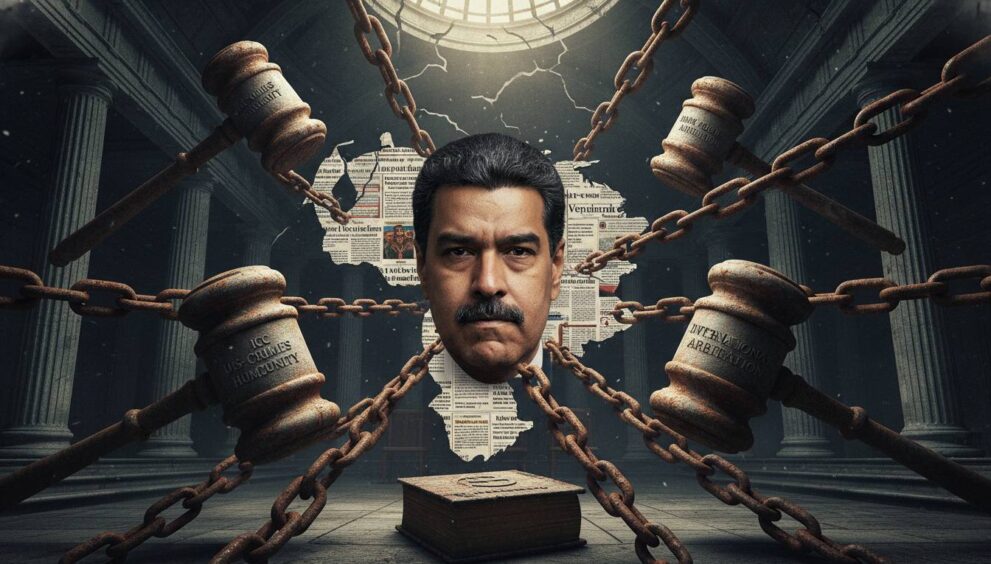
Nicolás Maduro is due back in federal court in Manhattan on March 26, 2026, after pleading not guilty in January to U.S. narco-terrorism and cocaine-trafficking charges first unveiled in 2020 and expanded in a superseding indictment. The immediate question is not only whether prosecutors can prove the drug case, but whether the court will allow it to proceed despite expected challenges over immunity, jurisdiction and the circumstances of Maduro’s transfer to the United States.
For U.S. prosecutors, this is one of the most consequential foreign-official criminal cases ever brought in the Southern District of New York. For readers, the key issue is simpler: how much of the government’s case rests on tested evidence, and how much may be vulnerable to pretrial attack. Public records show the indictment is not new, the allegations are broad, and at least one former Venezuelan general has already pleaded guilty in a related U.S. case. But the defense has several serious legal avenues before any jury hears the facts.
⚠️
The March 26 hearing is about whether the case moves forward cleanly, not whether guilt is decided.
AP reported on March 26, 2026 that Maduro returned to court seeking dismissal of the indictment amid a dispute tied to legal fees and broader geopolitical questions.
Maduro U.S. Case Snapshot
| Item | Publicly reported detail |
|---|---|
| Court | U.S. District Court, Southern District of New York |
| Judge | Alvin Hellerstein |
| Core charges | Narco-terrorism conspiracy, cocaine importation conspiracy, weapons-related counts |
| Original public unsealing | March 26, 2020 |
| First 2026 arraignment | January 5, 2026 |
| Next appearance | March 26, 2026, after postponement from March 17 |
Source: U.S. DOJ, AP, Time | accessed March 26, 2026
2020 charges still anchor the case
The backbone of the prosecution remains the four-count superseding indictment unsealed on March 26, 2020. The Justice Department said then that Maduro and other current or former Venezuelan officials worked with members of the FARC to “flood” the United States with cocaine, pairing drug-trafficking allegations with a narco-terrorism theory. The same public charging framework has carried into the 2026 proceedings.
That matters because older indictments can cut both ways. On one hand, prosecutors have had six years to build corroboration, secure cooperators and test evidence against related defendants. On the other, the age of the allegations gives defense lawyers room to attack witness memory, chain-of-custody issues and the government’s reliance on insiders who may have negotiated for leniency. Those are standard pressure points in large transnational narcotics cases.
Key Dates in the Maduro Prosecution
March 26, 2020: U.S. authorities publicly unseal narco-terrorism and trafficking charges against Maduro and other officials.
July 19, 2023: Former Venezuelan intelligence chief Hugo Carvajal is extradited from Spain to the United States in the related case.
September 2024: Carvajal pleads guilty to narco-terrorism, weapons and drug-trafficking charges in SDNY, according to DOJ.
January 5, 2026: Maduro appears in Manhattan federal court and pleads not guilty.
March 26, 2026: Maduro returns to court after the March 17 conference is postponed.
Why one guilty plea strengthens prosecutors
The strongest publicly verified point for the government is not rhetoric from 2020. It is the September 2024 guilty plea by Hugo Armando Carvajal Barrios, the former head of Venezuelan military intelligence, in the same broader SDNY prosecution. DOJ said Carvajal pleaded guilty to conspiracy to import cocaine into the United States, narco-terrorism for the benefit of the FARC and related weapons offenses.
A guilty plea by a senior insider does not prove Maduro’s guilt by itself. Still, it gives prosecutors three advantages. First, it shows at least part of the alleged conspiracy survived adversarial scrutiny long enough to produce a conviction. Second, it may provide direct testimony or documentary links from a high-level participant. Third, it helps rebut a defense claim that the case is purely political theater with no evidentiary core. Those are meaningful strengths in any conspiracy prosecution.
💡
The case looks stronger on evidence than on procedure.
A related guilty plea gives prosecutors factual support, but major pretrial disputes remain over immunity, jurisdiction and the legality of Maduro’s capture and transfer, as reported by AP and the Washington Post in January 2026.
What could weaken the indictment before trial?
The defense’s best-known arguments are procedural and constitutional, not factual. Multiple reports in January said lawyers were expected to challenge whether a foreign head of state can be tried in a U.S. court, whether U.S. courts have jurisdiction after Maduro’s seizure, and whether international-law objections should block the prosecution. Those issues do not automatically end the case, but they are serious enough to shape the March 26 hearing and later motion practice.
Public reporting suggests one obstacle for the defense is the U.S. position that it did not recognize Maduro as Venezuela’s legitimate leader for years after 2019. If the court accepts that position for immunity purposes, a major shield could fall away. The Washington Post reported in January that international-law arguments were unlikely, on their own, to rescue Maduro in court. That does not settle the issue, but it indicates the defense faces an uphill fight on dismissal.
Another complication is practical rather than doctrinal. AP reported on March 26 that Maduro was seeking dismissal amid a dispute over legal fees as Venezuela reestablished diplomatic relations with the United States. That introduces a political layer around representation and state resources, but it does not directly undercut the narcotics evidence unless the defense can tie it to due-process prejudice.
Strengths vs. Vulnerabilities in the Public Record
| Factor | Why it helps prosecution | Why defense will target it |
|---|---|---|
| 2020 indictment | Detailed, long-running conspiracy theory | Old allegations invite credibility attacks |
| Carvajal guilty plea | Related insider conviction supports conspiracy narrative | Cooperator motives can be challenged |
| SDNY venue | Experienced court for complex narcotics cases | Jurisdiction and extraterritorial reach may be contested |
| Head-of-state issue | U.S. non-recognition may weaken immunity claim | Defense can still press sovereign and international-law objections |
| 2026 transfer to U.S. | Places defendant before court | Capture circumstances may fuel dismissal motions |
Source: DOJ, AP, Washington Post, Guardian | accessed March 26, 2026
March 26 hearing: process first, verdict much later
The March 26 appearance is important because it tests whether the case can move from spectacle to ordinary federal litigation. Time reported after the January 5 arraignment that the next court date was first set for March 17, and later reporting said it was moved to March 26. That delay was linked in public reports to discovery and scheduling, which is common in document-heavy criminal cases.
So how strong is the case? Based only on verified public material, the answer is mixed but substantial. The prosecution appears stronger on the underlying conspiracy evidence than on the optics and legality surrounding Maduro’s transfer to U.S. custody. A related guilty plea from a former intelligence chief is a concrete asset. Yet before any jury trial, the court must navigate immunity, jurisdiction and due-process arguments that are unusually sensitive because the defendant is a former or disputed foreign head of state.
In plain terms, this is not a flimsy indictment on paper. It is also not a straightforward narcotics trial. The public record supports a case with real evidentiary weight and equally real procedural risk. That combination is why the March 26 hearing matters far beyond a routine status conference.
Frequently Asked Questions
What is Maduro charged with in the United States?
Public DOJ materials say the SDNY case includes narco-terrorism conspiracy, conspiracy to import cocaine into the United States and weapons-related charges. The charging framework was publicly unsealed on March 26, 2020 and remains the basis of the 2026 proceedings.
Has Maduro already entered a plea?
Yes. Time and other January 5, 2026 reports said Maduro pleaded not guilty at his first Manhattan federal court appearance. Judge Alvin Hellerstein set a follow-up conference that was later postponed to March 26, 2026.
What is the strongest public evidence supporting prosecutors?
The clearest publicly verified support is the related guilty plea by former Venezuelan intelligence chief Hugo Carvajal in September 2024. DOJ said he admitted to narco-terrorism, cocaine-importation conspiracy and weapons offenses tied to the broader case.
What is the defense’s strongest argument right now?
Based on public reporting, the defense is likely to focus on immunity, jurisdiction, international-law objections and the legality of Maduro’s seizure and transfer to the United States. Those issues could shape whether the indictment survives intact before trial.
Does the March 26 hearing decide guilt or innocence?
No. AP’s March 26 report frames the hearing as part of Maduro’s effort to throw out the indictment amid disputes including legal fees. It is a procedural stage, not a verdict. Any final determination on guilt would come much later, likely after extensive motion practice and, if the case survives, a trial.
Disclaimer: This article is for informational purposes only and does not constitute legal or compliance advice. Legal proceedings can change quickly, and readers should verify court developments independently and consult qualified legal professionals for advice on specific matters.