


How the US-Israel War on Iran Unfolded: First Four Weeks

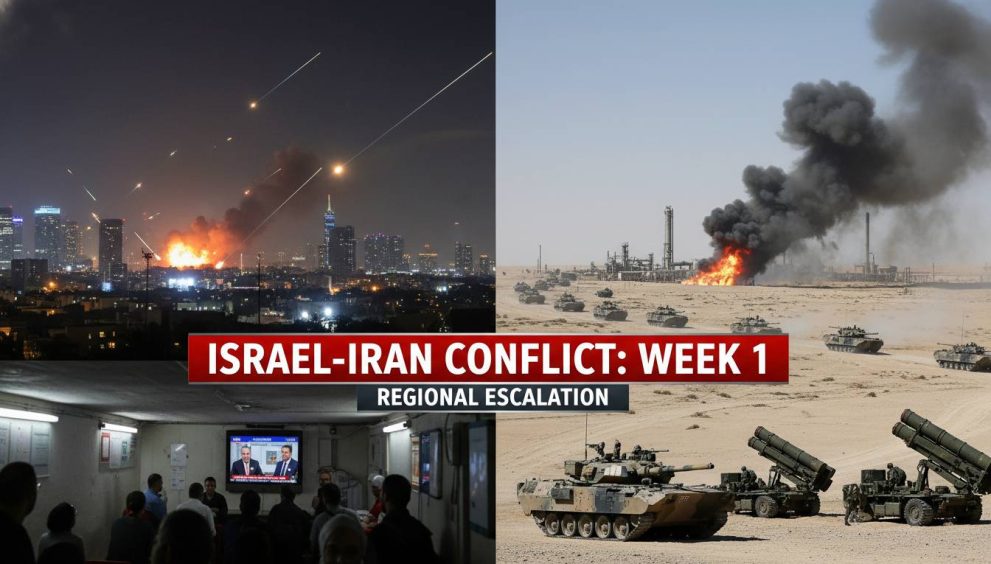
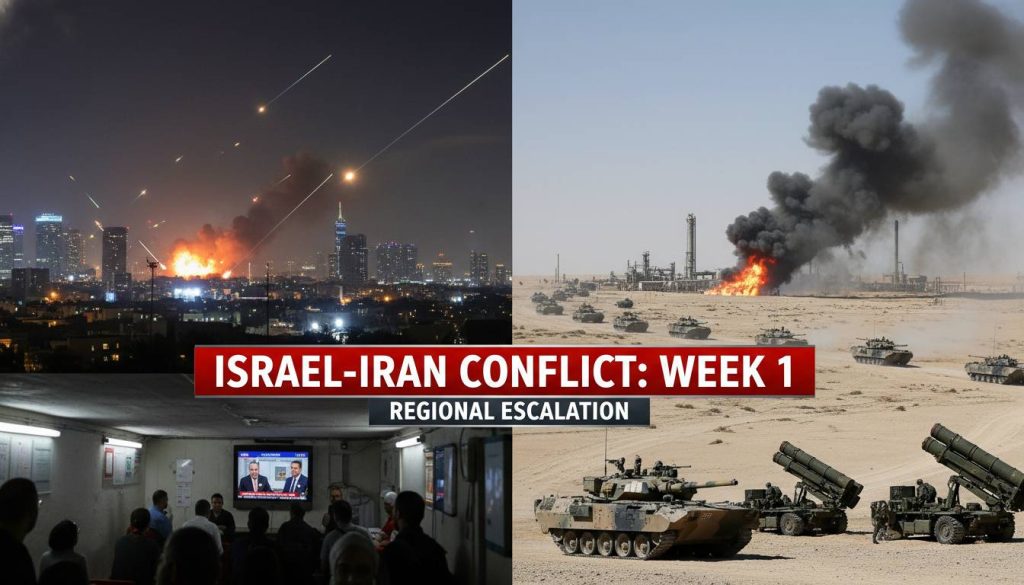
The first four weeks of the US-Israel war on Iran moved with unusual speed: an opening air campaign, Iranian retaliation across Israel and Gulf targets, widening strikes on energy and military infrastructure, and then a late-month push for a ceasefire that had not yet held by March 26, 2026. Public statements from Washington suggested from the outset that this would not be a one-night operation. What followed was a compressed regional war with military, diplomatic, and economic fronts all shifting at once.
The war began with a campaign Washington signaled would last weeks, not days
The clearest early clue about the scale of the conflict came from the White House itself. On March 6, 2026, White House Press Secretary Karoline Leavitt said the US expected the war on Iran to last “about four to six weeks,” according to Al Jazeera’s report published that day. Earlier, on March 2, 2026, President Donald Trump had said the war was projected to last “four to five weeks” and could go “far longer,” again as reported by Al Jazeera. Those statements mattered because they framed the operation as a sustained campaign rather than a limited punitive strike.
By the first week, the tempo was already high. Al Jazeera, citing the war monitor Airwars and official statements, reported on March 6 that the US and Israel had struck about 4,000 targets across Iran in the first four days of the offensive. Another Al Jazeera day-by-day report said the war had entered its seventh day on Friday, March 6, and that the initial attacks had begun the previous Saturday at 06:27 GMT. That places the start of the war on February 28, 2026, at 06:27 GMT.
From the beginning, the conflict was not confined to Iran alone. Reporting during the first week described parallel pressure points in Lebanon, Syria, Israel, and the Gulf. That geographic spread shaped the war’s first month. It was not simply an air war over Iran; it was a regional confrontation with multiple theaters and a constant risk of spillover into shipping lanes, oil infrastructure, and US military positions.
Week one: shock, scale, and immediate Iranian retaliation
The opening week established the pattern that would define the month: US-Israeli strikes inside Iran followed by Iranian missile and drone retaliation. Al Jazeera reported that in the first three days of the war, Iran launched more than 200 ballistic missiles at Israel. That figure alone showed Tehran was not treating the opening attacks as a one-off exchange. It was responding with sustained firepower.
By March 7, 2026, one week into the war, Al Jazeera’s day-eight explainer said the campaign had already exceeded the pace of many prior regional escalations. The White House was still saying the operation might run four to six weeks, while the Pentagon was declining to give a firm timeline. That gap was revealing. Politically, Washington wanted to project confidence. Militarily, it was leaving room for escalation.
The first week also brought early signs of mission expansion. Al Jazeera’s March 8 report said the US and Israel had begun hitting oil storage depots and refining facilities in Iran for the first time. That was a major threshold. Strikes on energy assets are different from strikes on military launch sites or command nodes. They raise the economic cost of war, increase the risk of global market disruption, and make de-escalation harder because they hit long-term state capacity.
At the same time, Iran widened its own response. The March 8 report said Tehran continued retaliatory strikes on Israel and on US military assets in Kuwait, Qatar, Saudi Arabia, and the United Arab Emirates, despite earlier signaling from Iranian President Masoud Pezeshkian that attacks on Gulf states could stop if their territory was not used to attack Iran. In practical terms, that meant the war’s first week had already moved beyond a bilateral exchange.
Week two: mission creep became harder to deny
By the second week, the central question was no longer whether the war was expanding. It was how far. Al Jazeera’s March 9 analysis described the conflict as a case of “mission creep,” arguing that the public rationale and the operational reality were diverging. Even stripped of opinion, the underlying facts supported that concern: the target list was broadening, the theaters were multiplying, and the timeline was stretching.
One of the most striking figures from this phase came via Reuters, cited by Al Jazeera on March 12: Pentagon officials told lawmakers in a classified briefing that the US had spent more than $11.3 billion in the first six days of the war, nearly $2 billion a day. That number is significant for two reasons. First, it suggests an exceptionally intensive opening campaign. Second, it indicates that the United States was not playing a merely supportive role to Israel; it was deeply and directly engaged.
Diplomatically, week two also showed that Iran was beginning to define conditions for an off-ramp rather than simply absorbing blows. Al Jazeera reported on March 12 that President Pezeshkian had set terms to end the war, while internal differences between Iran’s political leadership and the Islamic Revolutionary Guard Corps were becoming more visible. That mattered because wars often turn in their second week, when initial military plans collide with political constraints. In this case, neither side appeared ready to stop, but both were beginning to think about the terms of stopping.
Week three: casualties mounted and the war hit energy and shipping nerves
By the third week, the human and strategic costs were clearer. AP reported on March 23, 2026, that financial markets had swung sharply since the war began because of uncertainty over its duration. That same AP coverage said President Trump extended a deadline tied to reopening the Strait of Hormuz and delayed threatened strikes on Iranian power plants. Two days later, AP reported that the administration had offered Iran a 15-point ceasefire plan while the US military prepared to send at least 1,000 more troops to supplement roughly 50,000 already in the Middle East.
Those numbers tell their own story. A ceasefire proposal suggested concern about escalation. A troop increase at the same moment suggested preparation for more of it. That contradiction defined week three.
AP’s rolling coverage also showed how broad the war’s toll had become by the start of the fourth week. In a March 22-23 update published six days before today, AP said the death toll had risen to more than 1,500 people in Iran, more than 1,000 in Lebanon, 15 in Israel, and 13 US military members, along with additional civilian deaths on land and at sea in the Gulf region. Even allowing for wartime reporting limits, those figures underscored that the conflict had become a regional war in both military and humanitarian terms.
Week four: ceasefire diplomacy emerged, but the fighting did not stop
The fourth week did not bring resolution. It brought bargaining under fire. AP reported on March 24 that the Trump administration had delivered a 15-point ceasefire plan to Iran. On March 26, AP said Trump delayed a threatened strike on Iran’s energy infrastructure and extended his deadline for Tehran to reopen the Strait of Hormuz until April 6, saying talks were going “very well.” Yet on the same day, AP also reported that Iran had rejected the American ceasefire proposal and issued its own demands.
Meanwhile, strikes were still landing across the region. AP’s March 26 coverage said Iran launched more attacks on Israel and Gulf Arab countries, including a strike that hit a fuel tank at Kuwait International Airport and sparked a fire. That detail is important because it shows the war’s fourth week was not a quiet diplomatic phase. It was a coercive negotiation, with both sides still trying to improve their leverage through force.
In retrospect, the first four weeks followed a recognizable but dangerous arc. Week one was shock and rapid escalation. Week two brought mission expansion and enormous operational costs. Week three fused military pressure with economic and maritime risk. Week four introduced ceasefire diplomacy without ending the battlefield logic that had driven the conflict outward.
What defined the first month
Three features stand out. First, the war was openly planned as a multiweek campaign from the start, not an improvised escalation. Second, it regionalized almost immediately, with strikes and threats touching Israel, Iran, Lebanon, Gulf states, US bases, and the Strait of Hormuz. Third, diplomacy arrived only after the conflict had already widened and casualties had climbed sharply.
That is why the first four weeks matter. They were not just the opening chapter. They set the structure of the war: sustained air operations, reciprocal escalation, pressure on energy routes, and negotiations shaped by ongoing violence rather than replacing it.
Frequently Asked Questions
When did the US-Israel war on Iran begin?
Based on Al Jazeera’s day-eight report, the initial attacks began on February 28, 2026, at 06:27 GMT. The report published on March 7 said the war had entered its eighth day, which aligns with that start date and time.
How long did US officials say the war might last?
Public estimates varied slightly, but they were all measured in weeks. President Trump said on March 2, 2026, that the war was projected to last four to five weeks and could go longer. On March 6, White House Press Secretary Karoline Leavitt said the campaign could last about four to six weeks.
How intense was the opening phase of the war?
Very intense. Al Jazeera reported on March 6, citing Airwars and official statements, that the US and Israel struck about 4,000 targets across Iran in the first four days. It also reported that Iran launched more than 200 ballistic missiles at Israel in the first three days.
Did the war spread beyond Iran and Israel?
Yes. Reporting during the first month described Iranian strikes on US military assets in Kuwait, Qatar, Saudi Arabia, and the UAE, as well as fighting connected to Lebanon and concerns over the Strait of Hormuz. That is why many outlets described it as a regional war rather than a contained bilateral conflict.
What did the first month cost in military and human terms?
Reuters, cited by Al Jazeera on March 12, said Pentagon officials told lawmakers the US spent more than $11.3 billion in the first six days. AP later reported that by the start of the fourth week, the death toll had risen to more than 1,500 in Iran, more than 1,000 in Lebanon, 15 in Israel, and 13 US military members.
Was there a ceasefire by the end of the fourth week?
No durable ceasefire had taken hold by March 26, 2026. AP reported that the Trump administration offered a 15-point ceasefire plan, but Iran rejected it and issued its own demands, while attacks continued across Israel and Gulf Arab countries.