


Israeli Opposition Leader Warns of Aimless Multi-Front War

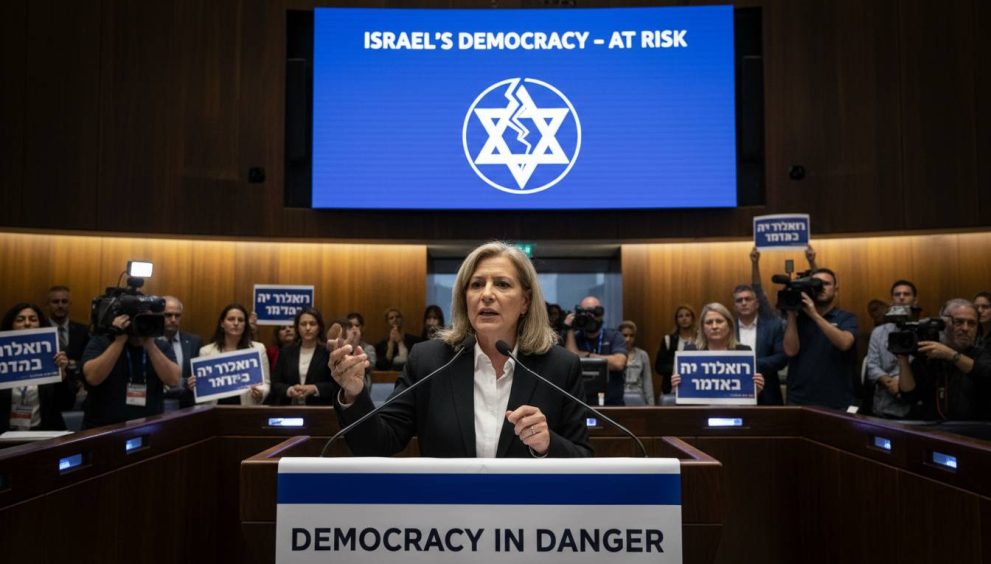
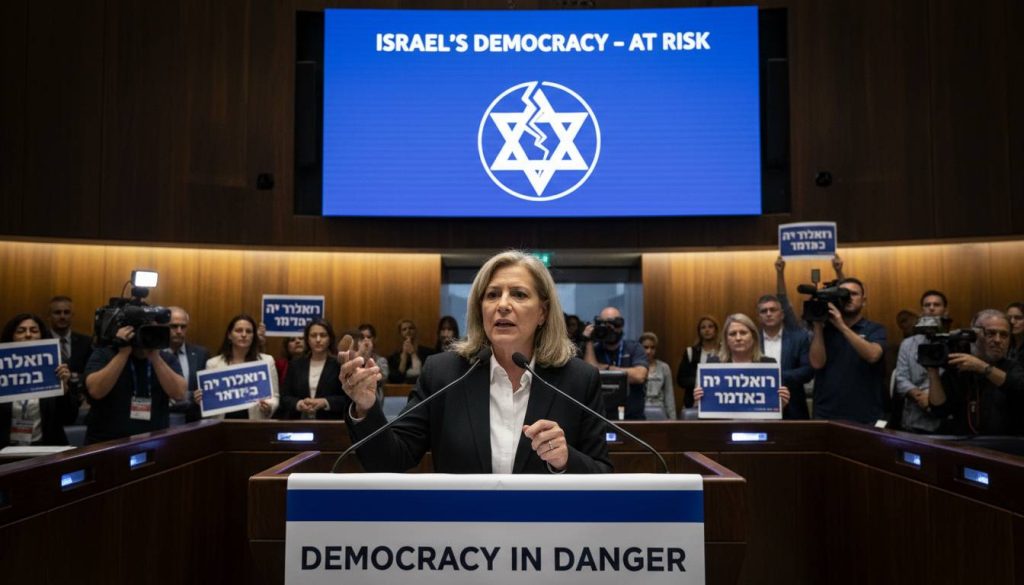
Israel’s opposition leader Yair Lapid accused Prime Minister Benjamin Netanyahu’s government of sending the army into a “multi-front war without a strategy” on March 27, 2026, sharpening a domestic debate over military manpower, war aims and the political direction of the conflict. The criticism lands as Israel remains engaged on several fronts after more than two years of war, with Lapid tying the government’s conduct to shortages of combat soldiers and the absence of a clear end-state, according to reports citing his remarks.
The intervention matters because Lapid has not always opposed military action outright. In June 2025, during Israel’s operation against Iran, he told the Associated Press that “it’s not the right moment to do politics,” reflecting how parts of the opposition had previously rallied behind major security operations even while criticizing Netanyahu’s broader wartime decision-making. His latest remarks therefore mark a sharper return to the argument that Israel’s government is pursuing prolonged conflict without a coherent political or military destination.
🔴
Lapid’s central charge is strategic, not only political.
He said the government was sending the army into a “multi-front war without a strategy, without the necessary means, and with far too few soldiers,” according to reports published on March 27, 2026.
March 27 criticism puts manpower at the center
Lapid’s latest attack focuses on a pressure point that has been building for months: personnel strain inside the Israel Defense Forces. A Times of Israel report from 2025 said activist groups told lawmakers that roughly one-third of soldiers deployed in the West Bank were not combat trained, and linked that problem to the stalled effort to broaden conscription, especially among ultra-Orthodox men. The same report said the IDF had issued 10,000 initial draft orders to members of the Haredi community between July 2024 and March 2025.
That background gives Lapid’s wording more weight. His argument is not simply that the war is unpopular or prolonged. It is that Israel is trying to sustain simultaneous military commitments while the burden of service remains uneven and reserve forces are stretched. The Washington Post also reported in March 2025 that some reservist units had thinned significantly as the Gaza war resumed, illustrating the attrition problem that has accompanied repeated mobilizations.
Key Verified Context Behind Lapid’s Warning
| Issue | Verified detail | Why it matters |
|---|---|---|
| Lapid’s March 27 criticism | He said the government was sending the army into a “multi-front war without a strategy” and with too few soldiers | Frames the dispute around war aims and force capacity |
| West Bank manpower strain | About one-third of soldiers deployed there were reported as not combat trained in a 2025 account | Suggests operational stress beyond Gaza and Lebanon |
| Draft expansion effort | 10,000 initial draft orders were sent to Haredi men between July 2024 and March 2025 | Shows the state has tried, but struggled, to widen the manpower pool |
| Earlier opposition posture | Lapid backed the Iran operation in June 2025 despite prior criticism of Netanyahu | Highlights that his latest remarks are not blanket opposition to force |
Source: AP, Times of Israel, reports published between June 16, 2025 and March 27, 2026.
Why the “without strategy” charge carries political force
In Israeli politics, accusing a government of lacking strategy is more serious than accusing it of tactical failure. Lapid has made similar arguments before. In July 2025, he said Netanyahu’s government had “failed in the war in Gaza” and no longer knew why soldiers were continuing to die there, according to a Times of Israel liveblog report. That earlier statement already pointed to a widening opposition case: battlefield actions were continuing, but the government had not defined a credible political outcome for Gaza or the wider regional confrontation.
The phrase also resonates because Israel’s wars have expanded across multiple arenas since the Hamas-led October 7, 2023 attack. By late 2025, Israeli commentary was already describing the country as fighting on seven fronts, including Gaza, Lebanon, the West Bank, Syria, Iraq, Yemen and the information sphere. In that setting, a claim that the state is in a “multi-front war” is not rhetorical excess; it reflects the broadening geography of conflict.
Timeline of the Opposition’s Wartime Argument
September 20, 2023: Lapid publicly warned Israel was moving toward a violent multi-front confrontation, according to later reporting.
June 16, 2025: Lapid told AP he backed Israel’s operation against Iran and said it was not the moment for politics.
July 28, 2025: He said the government had failed in Gaza and no longer knew why soldiers were dying there.
March 27, 2026: Lapid escalated the critique, accusing the government of waging a multi-front war without strategy and with too few soldiers.
How 10,000 draft orders failed to settle the soldier shortage
The manpower issue is politically explosive because it intersects with one of Israel’s most divisive domestic questions: whether ultra-Orthodox men should continue to receive broad exemptions from military service. The 10,000 initial draft orders reported by Times of Israel show the scale of the state’s attempt to widen recruitment, but they do not by themselves prove the shortage has been solved. On the contrary, the same reporting said operational activity in the West Bank was being curtailed because of personnel constraints.
That matters in a war environment where reserve service has become recurrent rather than exceptional. Historical context is important here. Israel called up about 300,000 reservists after the October 7 attack, according to the same 2025 report, and by then 844 soldiers had been killed in the war cited in that account. Those figures help explain why arguments over force sustainability, exemptions and repeated deployments have moved from the margins to the center of Israeli politics.
📊
The manpower debate is now inseparable from war policy.
Reports in 2025 tied curtailed West Bank operations to personnel shortages, while Lapid’s March 27, 2026 criticism linked those shortages directly to the government’s multi-front war planning.
What this means for Netanyahu’s war narrative in 2026
Netanyahu has long argued that sustained military pressure is necessary across Israel’s various fronts. Lapid’s challenge is that pressure without a defined strategic endpoint can become self-perpetuating. That line of attack is aimed not only at security policy but at Netanyahu’s political durability, because it suggests the government benefits from permanent mobilization while failing to resolve the conflicts that justify it. This is an inference drawn from the pattern of Lapid’s statements and the broader opposition critique, rather than a direct quote from a single source.
For U.S. readers, the immediate significance is less about a cabinet shake-up than about the condition of Israeli wartime consensus. When a centrist opposition leader who previously backed a major operation against Iran now says the government lacks strategy and soldiers, it signals a deeper fracture over how long Israel can sustain simultaneous campaigns and what success would even look like.
Frequently Asked Questions
Who is the Israeli opposition leader in this story?
The opposition leader is Yair Lapid, head of the Yesh Atid party and a former prime minister. Multiple reports over 2025 and 2026 identify him as the leading parliamentary critic of Benjamin Netanyahu’s government.
What exactly did Lapid say about the war?
Reports published on March 27, 2026 said Lapid accused the government of sending the army into a “multi-front war without a strategy, without the necessary means, and with far too few soldiers.” That formulation centers on strategy, equipment and manpower at once.
Why is the shortage of soldiers such a major issue in Israel?
Because repeated mobilizations have strained the reserve system while political disputes over ultra-Orthodox exemptions remain unresolved. A 2025 report said one-third of soldiers deployed in the West Bank were not combat trained and that 10,000 initial draft orders had been sent to Haredi men between July 2024 and March 2025.
Has Lapid always opposed Netanyahu’s military operations?
No. In June 2025, during Israel’s operation against Iran, Lapid told the Associated Press it was “not the right moment to do politics,” showing that he could support military action while still criticizing Netanyahu’s broader wartime leadership.
What does “multi-front war” refer to in this context?
It refers to Israel’s simultaneous or overlapping confrontations across several arenas, including Gaza, Lebanon and other regional theaters. By late 2025, Israeli commentary was describing the country as engaged across as many as seven fronts, underscoring how broad the conflict had become.
Disclaimer: This article is for informational purposes only. Information may have changed since publication. Always verify information independently and consult qualified professionals for specific advice.