



Air Strikes in Iraq’s Anbar Kill Seven Fighters in Heinous Crime

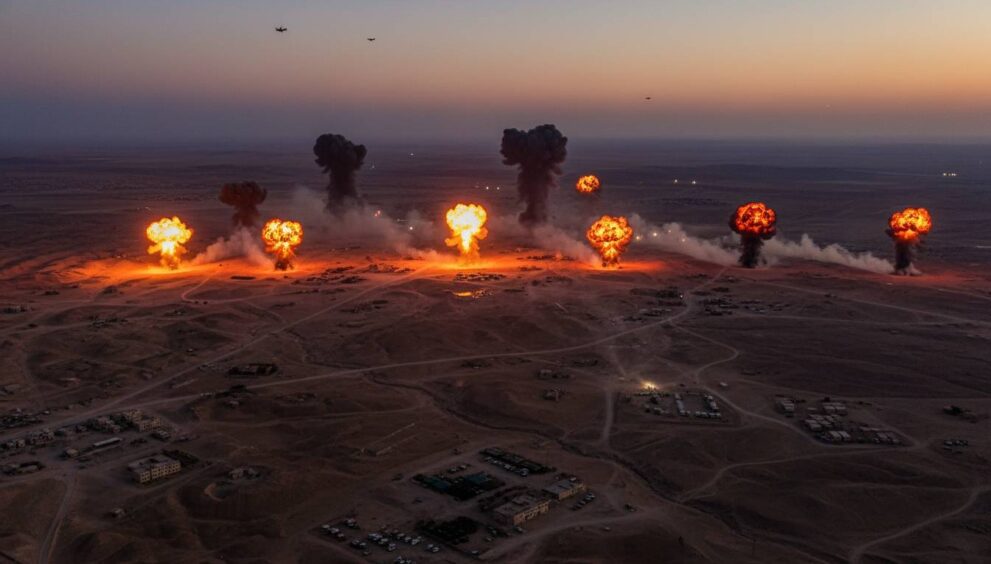
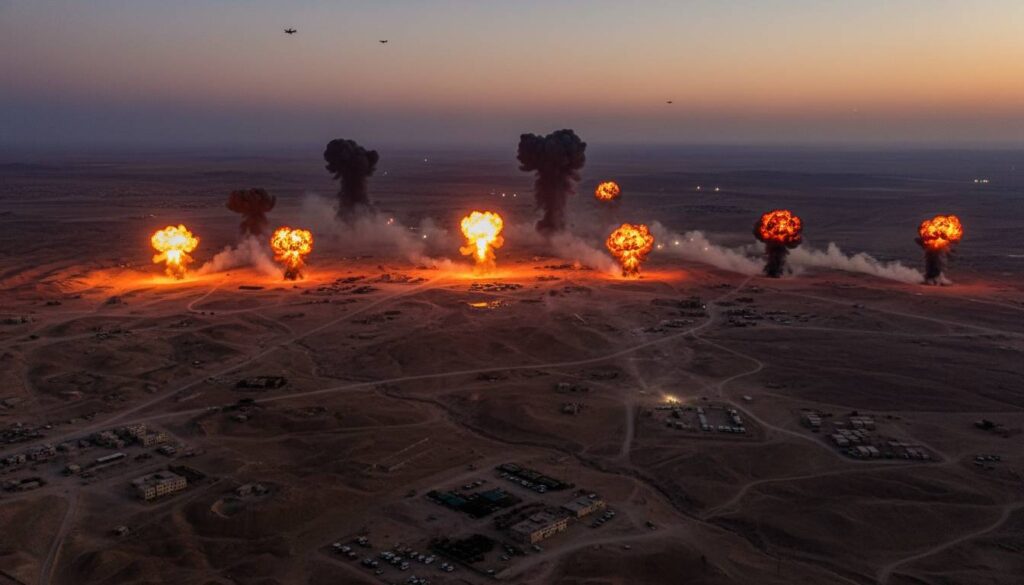
Air strikes in Iraq’s western Anbar province killed seven fighters, according to local security reporting tied to the latest round of attacks on armed groups operating near the Iraq-Syria frontier. The incident, described by Iraqi political and militia-linked figures as a “heinous crime,” lands at a sensitive moment for Baghdad, which is trying to contain spillover from a wider regional conflict while preserving state control over security policy.
The strike adds to a fast-moving pattern in March 2026: repeated attacks on armed factions in Iraq, especially in areas linked to the Popular Mobilization Forces, or PMF, and strategic transit corridors near al-Qaim and other western districts. Publicly available reporting from AFP said at least 11 Iran-backed fighters were killed in strikes near the Iraq-Syria border and Baghdad on March 12, 2026, while Al Jazeera reported that a separate March 10 strike in Iraq killed four Iran-linked fighters. Those incidents, taken together with later reports of fatalities in Anbar, show that western Iraq remains one of the most exposed theaters in the regional escalation.
🔴
Seven fighters were reported killed in Anbar in the latest strike episode.
Open-source reporting on March 2026 incidents in Iraq shows Anbar repeatedly appearing as a target zone because of its proximity to Syria, militia logistics routes, and bases used by armed factions. Sources: IraqiNews, AFP, Al Jazeera; accessed March 25, 2026.
March 2026 Strikes Put Anbar Back at the Center
Anbar is Iraq’s largest province and a long-running security flashpoint. It borders Syria, Jordan and Saudi Arabia, and includes key military and logistics nodes such as al-Qaim and the Ain al-Asad area. That geography matters. Armed groups aligned with Iran, Iraqi state-linked formations, remnants of Islamic State cells, and foreign military interests have all operated in or around the province over the past decade. In March 2026, reporting from FDD’s Long War Journal said an attack on March 12 targeted a PMF headquarters in the Qaim border district of Anbar. AFP, in separate reporting the same day, said strikes killed at least 11 Iran-backed fighters near the Iraqi-Syrian border and in Baghdad.
The seven deaths reported in Anbar therefore do not stand in isolation. They fit a broader sequence in which western Iraq has become a pressure point for retaliatory or pre-emptive strikes. Al Jazeera’s March 10 report said an air strike killed four Iran-linked fighters in Iraq, underscoring how quickly the casualty count has accumulated this month. Open-source timeline pages are not primary evidence, but they also reflect the same pattern of repeated strikes in Iraq during March 2026, including incidents in Anbar, Nineveh and Salah al-Din.
Reported March 2026 Strike Incidents in Iraq
| Date | Location | Reported fatalities | Reported target |
|---|---|---|---|
| March 10, 2026 | Iraq, unspecified in headline coverage | 4 | Iran-linked fighters |
| March 12, 2026 | Near Iraq-Syria border and Baghdad | At least 11 | Iran-backed fighters |
| March 2026 | Anbar | 7 | Fighters reported killed in air strikes |
Source: Al Jazeera, AFP, IraqiNews | accessed March 25, 2026
Why the “Heinous Crime” Label Matters in Baghdad
The phrase “heinous crime” is politically loaded in Iraq. It is often used by militia-linked officials, parliamentary blocs, or security actors to frame an air strike not simply as a battlefield event but as a sovereignty violation. That framing can shape the domestic response even before responsibility is formally assigned. A Congressional Research Service brief published in late 2025 noted that Iraqi officials had previously called a U.S. strike “a heinous crime” and warned it could drag Iraq deeper into regional conflict. That precedent helps explain why the wording carries weight beyond rhetoric.
In practical terms, such language can increase pressure on Prime Minister Mohammed Shia al-Sudani’s government to investigate, condemn, or seek diplomatic assurances. It can also sharpen demands for tighter control over foreign military activity on Iraqi soil. Iraq has spent years balancing ties with the United States, which supports counter-ISIS operations, and with Iran-backed factions that are formally part of the PMF structure but maintain their own political and military influence. When a strike kills fighters in Anbar, the immediate question is not only who died, but also whether the dead were part of an official security formation, an allied faction, or an armed group outside direct state command.
Anbar Strike Timeline and Context
January 24, 2024: Rudaw reported a U.S. strike on a PMF-linked base in Anbar’s Qaim district after attacks on al-Assad Airbase, with at least one fighter killed and two wounded.
March 10, 2026: Al Jazeera reported an air strike in Iraq killed four Iran-linked fighters amid broader regional tensions.
March 12, 2026: AFP reported strikes killed at least 11 Iran-backed fighters near the Iraq-Syria border and in Baghdad.
March 2026: Reporting tied to Anbar said seven fighters were killed, prompting denunciations describing the attack as a heinous crime.
7 Deaths in Anbar Reflect a Wider Border-Corridor Risk
The western border corridor has strategic value because it links Iraqi territory to eastern Syria, where multiple armed actors operate and where supply routes have long been contested. For that reason, al-Qaim and surrounding parts of Anbar have repeatedly appeared in strike reporting. FDD’s March 13 account said a PMF headquarters in the Qaim border district was targeted on March 12. AFP’s reporting on fatalities near the border the same day reinforces the significance of that corridor.
There is also a second layer of risk: confusion over attribution. In several Iraq strike episodes over the past few years, officials, armed groups and foreign governments have issued conflicting accounts about who carried out the attack and who was present at the site. That matters because the legal and political consequences differ sharply depending on whether the target is described as an ISIS cell, a PMF unit, or an Iran-backed militia operating under a separate chain of command. Public reporting available as of March 25, 2026, does not establish a single, universally confirmed attribution for every March strike in Iraq. What it does establish is a sustained tempo of attacks and mounting fatalities.
ℹ️
Anbar’s importance is geographic as much as political.
The province sits on Iraq’s western frontier and includes routes that have repeatedly featured in operations against ISIS and in strikes involving Iran-backed factions. That makes casualty reports there especially sensitive for Baghdad. Sources: AFP, FDD, Rudaw; accessed March 25, 2026.
What Baghdad and Regional Actors May Do After the Strike
The next steps usually follow a familiar sequence: local commanders report casualties, political factions issue condemnations, Baghdad weighs an investigation, and outside actors either deny involvement or remain silent. If the fighters killed in Anbar are confirmed to have belonged to a PMF formation integrated into Iraq’s security architecture, the sovereignty issue becomes more acute. If they are identified as a non-state armed faction, the debate shifts toward command responsibility and the extent of state oversight.
For the United States and its partners, the policy challenge is equally clear. Washington still supports counter-ISIS activity in Iraq, and Anbar has historically been central to those operations. Yet every strike in western Iraq now unfolds in a regional environment shaped by confrontation involving Iran-aligned groups. That overlap raises the risk that a tactical military action is interpreted as part of a broader regional war. The result is a narrower margin for error, especially when casualty counts rise and official Iraqi language hardens.
Frequently Asked Questions
Frequently Asked Questions
Where did the air strikes take place?
The reported strike took place in Iraq’s Anbar province, a vast western region bordering Syria. Public reporting in March 2026 repeatedly identifies Anbar, especially the al-Qaim border area, as a focal point for attacks on armed groups and militia-linked positions. Sources accessed March 25, 2026.
How many fighters were killed?
The incident referenced here reports seven fighters killed in Anbar. Separate March 2026 strike reports in Iraq cited four deaths on March 10 and at least 11 on March 12 in other locations, showing a broader pattern of mounting fatalities this month.
Who were the fighters?
Available public reporting does not fully and uniformly identify all of the dead in every March 2026 strike case. Some reports describe the targets as Iran-backed or Iran-linked fighters, while others refer more generally to PMF-linked positions or armed factions near the Iraq-Syria border.
Why is the phrase “heinous crime” significant?
In Iraq, that phrase signals more than condemnation. It frames a strike as a possible violation of Iraqi sovereignty and can trigger demands for investigation or retaliation. A Congressional Research Service brief notes Iraqi officials used the same wording in response to earlier U.S. strikes.
Why is Anbar so strategically important?
Anbar connects Iraq to Syria and contains military sites, border crossings and logistics routes that have long mattered in campaigns against ISIS and in monitoring Iran-backed armed networks. That geography makes any strike there politically sensitive and militarily consequential.
Conclusion
The killing of seven fighters in Iraq’s Anbar province is not an isolated security event. It sits inside a wider March 2026 pattern of strikes on armed actors in Iraq, especially in western border areas where sovereignty, militia power, and regional confrontation overlap. The immediate facts remain narrower than the political reaction: fatalities are reported, denunciations are strong, and attribution questions remain central. What happens next will depend on whether Baghdad can establish responsibility, contain escalation, and prevent Anbar from becoming an even more active front in a broader regional conflict.
Disclaimer: This article is for informational purposes only. Information may have changed since publication. Always verify information independently and consult qualified professionals for specific advice.