
Why Is Trump Asking Europe for Help in the War on Iran?

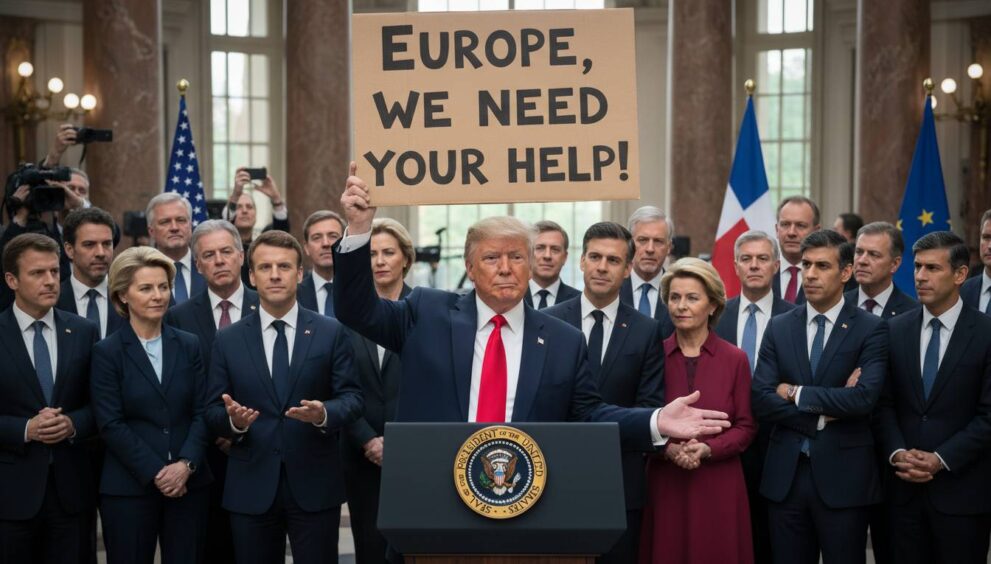
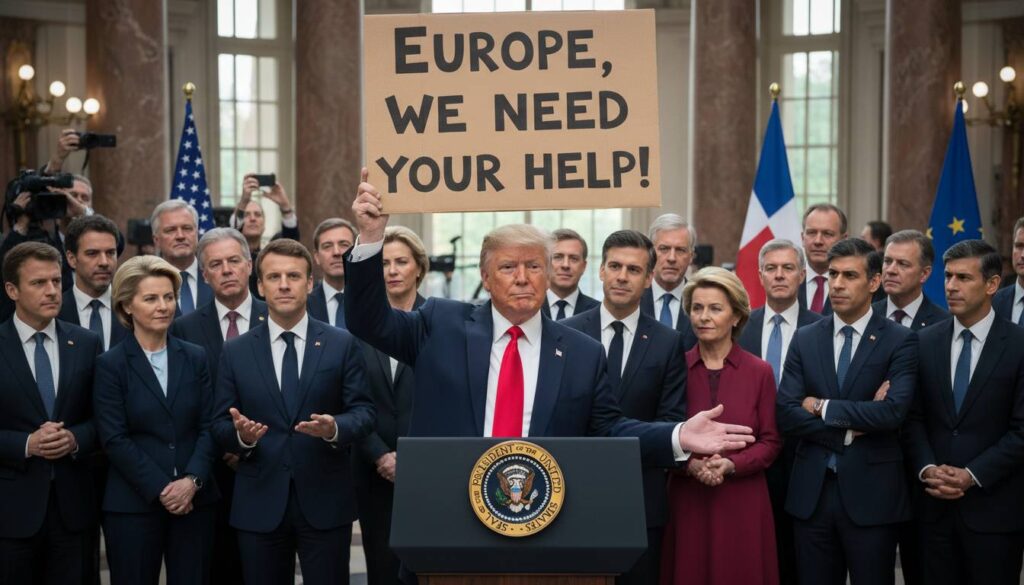
President Donald Trump’s push for European backing in the Iran war reflects a practical problem more than a diplomatic preference: the United States can strike Iran, but sustaining military pressure, protecting shipping lanes, securing bases, and building political legitimacy are harder without allied support. By March 24, 2026, major European governments had condemned Iranian attacks and backed de-escalation, yet several remained reluctant to join U.S. military operations directly, according to statements from the EU, the UK government, and reporting from AP.
ℹ️
The central issue is burden-sharing.
AP reported on March 24, 2026, that most other G7 countries had reacted “coolly at best” to the U.S.-Israeli military operation against Iran and had declined to participate, even as the Trump administration sought broader backing.
March 24 diplomacy shows a coalition gap
Trump is asking Europe for help because Washington appears to face a coalition shortfall. AP reported on March 24, 2026, that Secretary of State Marco Rubio planned travel to France to make the case for the Iran war to skeptical G7 allies. That matters because Britain, Canada, France, Germany, Italy, and Japan had not fully aligned with the U.S. military campaign, despite shared concern over Iran’s regional actions.
That gap has both military and political consequences. Militarily, European states control or influence key logistics, intelligence relationships, airspace access, naval deployments, and sanctions coordination. Politically, U.S. operations look more isolated when NATO and the G7 are divided. The Washington Post reported on March 7, 2026, that Trump and his team had spent months criticizing Europe, only to later seek support as the war expanded.
What Europe Can Provide
| Area | Why It Matters | Status Indicated by Public Reporting |
|---|---|---|
| Diplomatic backing | Improves legitimacy and pressure on Tehran | Mixed, with several allies skeptical |
| Naval support | Protects shipping and energy routes | Important as Hormuz security becomes central |
| Basing and transit access | Supports air operations and logistics | Sensitive and politically contested |
| Sanctions coordination | Raises economic pressure on Iran | More feasible than direct combat support |
| Air defense and intelligence | Helps counter missiles and drones | Discussed with allies and partners |
Source: AP, EU Council, GOV.UK, Washington Post | accessed March 24, 2026
Why Strait of Hormuz pressure raised Europe’s importance
One reason Europe matters is energy security. Any conflict involving Iran quickly raises the risk to shipping through the Strait of Hormuz, one of the world’s most important oil transit chokepoints. Even where European governments avoid direct combat roles, they have strong incentives to support maritime security, insurance stability, and coordinated deterrence because energy price shocks hit European economies directly.
Public reporting in March 2026 indicated that Trump had called on countries receiving oil through Hormuz to help secure the passage. While that specific formulation appears in secondary reporting and needs cautious treatment, it fits the broader pattern visible in official and media accounts: the administration wants partners to share the cost and risk of keeping regional trade routes open.
Timeline of Europe’s Role in the Iran Crisis
January 30, 2026: U.S. allies in the Middle East urge restraint as Washington warns Iran and builds military presence, according to AP-republished reporting.
March 1, 2026: The EU and the E3—Britain, France, and Germany—issue statements condemning Iranian actions while also emphasizing de-escalation and regional stability.
March 5, 2026: EU and Gulf ministers hold an extraordinary meeting on recent Middle East developments and Iran’s attacks against Gulf states.
March 24, 2026: AP reports Rubio is heading to France to persuade skeptical G7 allies as the U.S. seeks broader support.
What 3 European blocs can offer Trump
Europe is not a single actor here. The first bloc is the E3—Britain, France, and Germany—which carries the most diplomatic weight on Iran because of its long involvement in nuclear negotiations and sanctions policy. Their joint statement on March 1, 2026, condemned Iranian attacks and said those actions threatened allied personnel and civilians across the region. That gives Washington some common ground, even if it does not equal approval for every U.S. strike.
The second bloc is the European Union institutions. The EU’s March 1 statement urged Iran to end its nuclear program, curb its ballistic missile program, and stop destabilizing activities in the region and in Europe. That language suggests Europe shares many of Washington’s concerns about Iran’s capabilities, but it still leaves room for disagreement over military escalation.
The third bloc is NATO-linked support. Even when member states avoid offensive operations, they can still contribute through intelligence sharing, missile defense coordination, logistics, and force protection. That distinction matters because some European governments may find indirect support politically easier than joining combat missions.
📊
Europe’s value is broader than troop numbers.
In this conflict, the most important European contributions are diplomatic cover, sanctions alignment, naval security, basing access, and air-defense cooperation rather than large-scale ground deployments. That reading is supported by official EU and E3 statements and AP reporting on allied reluctance.
Why skepticism in Paris, Berlin, and elsewhere matters
Trump’s request is also shaped by resistance inside Europe. AP reported on March 24 that nearly all other G7 nations had reacted coolly to the U.S.-Israeli operation. The Washington Post reported earlier in March that some European leaders questioned the legality and strategy of the campaign. That skepticism limits how far Europe can go, especially where parliaments, coalition governments, or public opinion oppose another open-ended Middle East war.
France, Germany, and the UK have condemned Iranian attacks, but that is not the same as endorsing a broad U.S. war plan. Europe remembers the costs of Iraq, Libya, and Afghanistan. It also faces direct exposure to refugee flows, terrorism risks, and energy disruption if Iran collapses or the war widens. The European Council on Foreign Relations argued on March 5 that a failed Iranian state would create a major humanitarian and migration crisis for Europe. While ECFR is an analytical source rather than an official one, it captures a concern that helps explain European caution.
How Europe could help without joining full combat
The most likely forms of help are narrower than the phrase “join the war” suggests. Europe can tighten sanctions, support maritime patrols, share intelligence, provide missile-defense assets, facilitate diplomacy, and allow use of bases or transit routes. AP also reported in early March that the U.S. was open to taking assistance from multiple countries on countering Iranian drones, showing that the administration’s requests are not limited to direct strike participation.
That matters because Trump may be asking Europe for three things at once: operational support, diplomatic legitimacy, and post-conflict leverage. If Washington wants Tehran to negotiate, European capitals can serve as channels, pressure points, or guarantors in ways the U.S. alone cannot. AP reported on March 24 that Trump said there were ongoing negotiations between Washington and Tehran, though Iranian officials disputed the claim. Even that dispute underlines why third-party diplomacy matters.
Frequently Asked Questions
Frequently Asked Questions
Is Europe actually joining Trump’s war on Iran?
As of March 24, 2026, public reporting indicates that major European governments have not broadly joined the U.S.-Israeli military campaign. AP said most other G7 countries reacted coolly and declined to participate directly, although some support may still come through diplomacy, sanctions, logistics, or maritime security.
Why does Trump need Europe if the U.S. military is stronger?
The issue is not only firepower. Europe can add political legitimacy, sanctions coordination, naval assets, intelligence links, and access to bases or transit routes. Official EU and E3 statements show alignment against Iranian escalation, even where support for direct military action remains limited.
Are energy markets part of the reason Trump wants European help?
Yes. The Iran conflict raises risks around Gulf shipping and the Strait of Hormuz, which matters for oil flows and insurance costs. European economies are highly exposed to energy shocks, so maritime security and trade-route protection are areas where U.S. and European interests overlap strongly.
What kind of help is Europe most likely to provide?
The most plausible support is indirect: sanctions, diplomacy, intelligence sharing, missile defense, naval patrols, and logistical access. That is more politically feasible for many European governments than direct participation in offensive strikes, based on the gap between official concern about Iran and reported reluctance to join combat.
Is Trump asking Europe because negotiations with Iran are underway?
Partly. AP reported on March 23 and March 24, 2026, that Trump said the U.S. and Iran were talking, while Iranian officials expressed skepticism. In that setting, European governments can matter as intermediaries or pressure partners even if they do not enter the war militarily.
Conclusion
Trump is asking Europe for help because wars against Iran are not won by airstrikes alone. They require shipping security, sanctions discipline, diplomatic channels, allied basing, and international legitimacy. Europe can provide all of those, but March 2026 reporting shows that many European governments want distance from a widening war even while condemning Iran’s actions. That leaves Trump pursuing a narrower goal: not necessarily a fully united Western war coalition, but enough European support to sustain pressure, protect trade routes, and strengthen any eventual negotiation.
Disclaimer: This article is for informational purposes only. Information may have changed since publication. Always verify information independently and consult qualified professionals for specific advice.