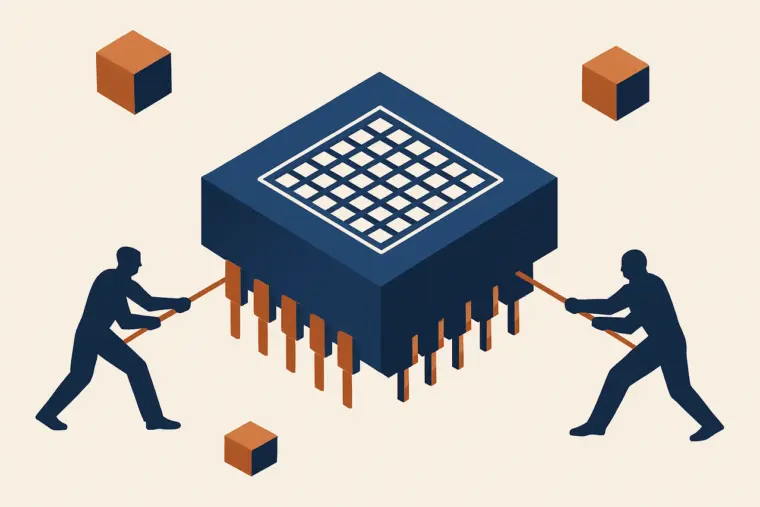
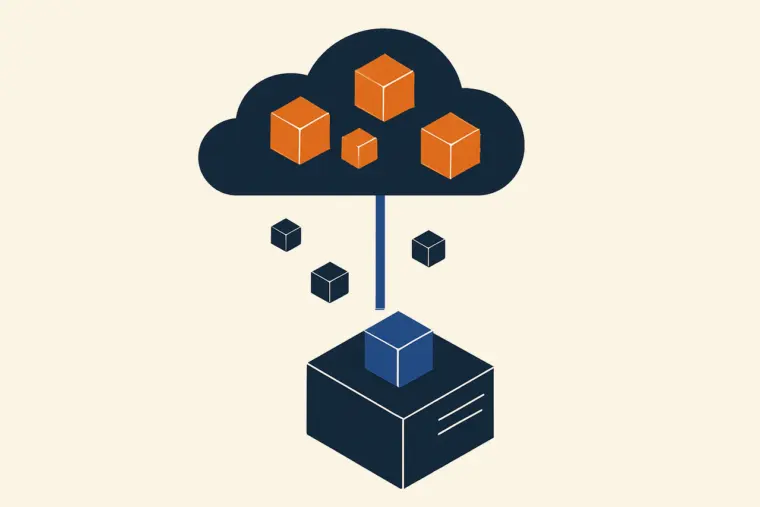
An API, short for application programming interface, is a set of rules that lets one software program request data or services from another. It works as an intermediary: an application asks for something in a defined way, and another application answers, without either side needing to know how the other is built internally. APIs are the connectors that let today’s software work together.
What does an API actually do?
An API defines how a program can ask for data, features or functionality from another program, and how the answer will come back. Think of it as a contract. One side promises that if you send a request in a specific format, it will return a specific kind of response. That predictability is what lets teams build software that plugs into other software reliably.
A helpful comparison is ordering at a restaurant. You read a menu, tell the waiter what you want, and the kitchen prepares it. You never enter the kitchen yourself. The API is the menu and the waiter combined: it lists what you can ask for and carries your request to the system that fulfils it, then brings the result back. You do not need to know how the kitchen is organised, only what you are allowed to order.
How does an API work?
Most modern APIs follow a client and server pattern. The client is the program making the request, and the server is the program that holds the data or capability and sends back a response. Under a typical app screen, dozens of such requests may be firing off to fetch information, which the app then arranges for you to see.
The request usually specifies what is wanted and any details needed to fulfil it, such as a search term or a user identifier. The server processes the request and returns a response, often as structured data that the client can read and display. Because the exchange follows agreed rules, the two programs can be written in different languages, run on different machines, and still cooperate smoothly.
Are there different kinds of API?
Yes. Some APIs are internal, used only within a single organisation to let its own systems talk to each other. Others are partner APIs, shared with selected outside companies. Public APIs are opened to any developer, sometimes for free and sometimes for a fee. There are also different technical styles, including REST, which dominates the web, along with older approaches and newer ones designed for specific needs. The common thread is a clear, published interface that hides internal complexity.
An API is not the same as the software behind it. The interface is the agreed set of requests and responses, while the implementation is the code that actually does the work. This separation is deliberate and powerful: the team running a service can rewrite or improve the code behind an API without breaking the programs that depend on it, as long as the published interface stays the same. That stability is what lets large ecosystems of software grow around a single service.
What is a REST API?
REST, short for representational state transfer, is the most common style for web APIs. A REST API uses standard web protocols and familiar HTTP methods to work with resources, and it identifies each resource with a URL. The main methods are summarised below.
| Method | Purpose | Everyday example |
|---|---|---|
| GET | Retrieve existing data | Load a list of messages |
| POST | Create new data | Send a new message |
| PUT | Update existing data | Edit a saved profile |
| DELETE | Remove data | Delete a photo |
The specific web address where the API receives one of these requests is called an endpoint. A single API often exposes many endpoints, each tied to a different resource or action, so that clients can request exactly what they need. Responses often arrive in a lightweight text format that is easy for programs to read.
How are APIs kept secure?
Because APIs open a door into a system, they need controls over who may use them. Many require a key or token that identifies the caller and confirms it is permitted. Providers also often set rate limits, capping how many requests a caller can make in a given time to prevent abuse and protect the service. Good API design documents these rules clearly so developers know what is allowed and what to expect when something goes wrong.
What happens when a request fails?
APIs are also designed to report problems in a predictable way. When a request cannot be fulfilled, the server usually returns a status code that signals what went wrong, along with a short message. Familiar examples include a code meaning the requested item was not found, or one meaning the caller is not authorised. These standard responses let the calling program react sensibly, perhaps by asking the user to sign in again or by trying a different request, instead of simply failing silently.
Well-documented APIs list the possible responses so developers can plan for them. Clear documentation, including examples of requests and replies, is often what separates an API that is pleasant to use from one that frustrates the people building on it.
Why do APIs matter?
APIs matter because they let developers reuse capabilities instead of rebuilding them. A team that wants maps, payments or weather data does not have to create those systems from nothing; it can call an existing API and focus on its own product. This speeds up development and lets specialised services reach many applications at once.
They also enable large systems to be broken into smaller parts that communicate through clear interfaces, which makes complex software easier to build and maintain. For businesses, APIs can even become products in their own right, opening data and services to partners and outside developers and creating whole ecosystems around a platform.
Where do people encounter APIs?
Most people use APIs constantly without noticing. Signing in to a website with an existing account, viewing a live map embedded in a food-delivery app, checking a forecast, or paying at an online checkout all rely on APIs passing requests between separate systems. Each of those familiar actions is really one program politely asking another for help and getting a reliable answer.
Because they hide complexity behind a simple, agreed interface, APIs have become one of the quiet foundations of the connected digital world, linking countless services into the seamless experiences people now take for granted. As software continues to move online and devices become more connected, that role is only growing, which is why understanding what an API is has become part of digital literacy.
Frequently Asked Questions
What does API stand for?
API stands for application programming interface. It is a set of rules and protocols that lets different software applications communicate, allowing one program to request data or functions from another in a predictable way.
How is an API different from a user interface?
A user interface is designed for people, with buttons and screens. An API is designed for software, exposing functions and data that other programs can call directly. Behind many apps, dozens of API requests run quietly to fetch what the screen displays.
What is a REST API?
REST is a popular architectural style for web APIs. A REST API sends requests over standard web protocols using methods such as GET to read data, POST to create it, PUT to update it and DELETE to remove it, with each resource identified by a URL.
What is an API endpoint?
An endpoint is the specific location, usually a URL, where an API receives requests for a particular resource on its server. An API can have many endpoints, each corresponding to a different piece of data or function it offers.
Why do APIs matter to ordinary users?
APIs quietly power daily digital life. Logging in with an existing account, seeing a live map inside another app, checking a weather forecast or paying at an online checkout all rely on APIs connecting separate systems behind the scenes.