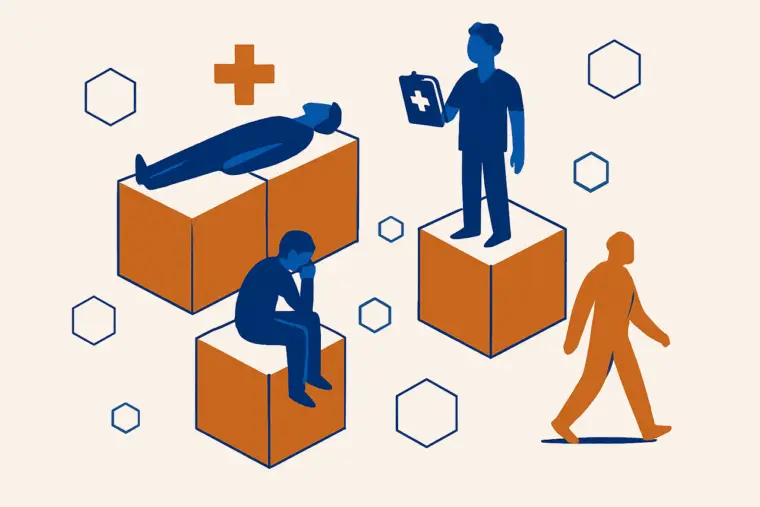
Herd immunity is the indirect protection from an infectious disease that occurs when a large share of a population is immune, so the disease can no longer spread easily. According to the World Health Organization, it is also called population immunity, and it can arise through vaccination or through immunity developed after a previous infection. When enough people are immune, chains of transmission break down and even those who are not immune are less likely to be exposed.
This article is general information, not medical advice. It explains the concept as described by public-health authorities such as WHO and the U.S. Centers for Disease Control and Prevention, and does not offer guidance on individual vaccination decisions.
How does herd immunity work?
Infectious diseases spread from person to person. Each infected person can pass the disease to others, who then pass it on again, forming chains of transmission. Immune people interrupt those chains: because they are very unlikely to catch or carry the infection, they do not pass it forward. When a high enough proportion of a community is immune, an infected person meets mostly immune contacts, and the outbreak fizzles out instead of growing.
The key word is indirect. Herd immunity does not make any one individual immune. Instead, it changes the environment so that the pathogen has fewer opportunities to spread, which shields the whole group, including people who are not personally protected. This is different from the direct protection a vaccine gives to the person who receives it. A vaccinated individual gains their own defence, and, when many people are vaccinated, the community gains an additional layer of shared, indirect protection on top of that.
Who does herd immunity protect?
Herd immunity is especially important for people who cannot be vaccinated or who do not respond strongly to vaccines. This can include very young infants, older adults, and people with certain medical conditions that weaken the immune system. These individuals depend on the immunity of those around them. If most of the community is immune, the disease is far less likely to reach a vulnerable person, giving them protection they could not achieve on their own.
What share of a population needs to be immune?
There is no single figure, because the threshold depends on how contagious the disease is. As a general guide, somewhere between 50 and 90 percent of a population usually needs to be immune before infection rates begin to fall. The more easily a disease spreads, the higher that share must be.
Measles is one of the most contagious diseases known, and interrupting its spread requires roughly 95 percent of the population to be immune. Polio, which spreads less readily, has a lower threshold of around 80 percent. These differences explain why vaccination targets vary from disease to disease.
| Disease | Relative contagiousness | Approximate immunity threshold |
|---|---|---|
| Measles | Very high | About 95% |
| Polio | High | About 80% |
| Many other infections | Varies | Roughly 50% to 90% |
How is the threshold calculated?
Epidemiologists estimate the threshold using a value called the basic reproduction number, written as R-nought. This is the average number of people that one infected person would go on to infect in a population where everyone is susceptible. A higher R-nought means a more contagious disease.
The herd immunity threshold is calculated as one minus one divided by R-nought. Because a larger R-nought produces a larger threshold, highly contagious diseases like measles require a much higher share of immune people than less contagious ones. These figures are estimates rather than exact cut-offs, since real populations mix unevenly and immunity can change over time.
Vaccination versus natural infection
Immunity that contributes to herd immunity can be built in two ways: through vaccination or through immunity acquired after recovering from an infection. Public-health authorities strongly favour vaccination as the route to population immunity. WHO has stated that herd immunity should be achieved by protecting people with vaccines, not by allowing a disease to spread through a population.
The reason is the human cost. Reaching a threshold through natural infection would mean large numbers of people becoming ill first, leading to avoidable complications, long-term harm and deaths. Vaccination aims to build the same population-level protection without that toll. The strength and duration of immunity, whether from a vaccine or past infection, also varies by disease, which can affect how durable herd immunity is.
What is the basic reproduction number?
Because the reproduction number is so central to herd immunity, it is worth understanding in a little more detail. R-nought describes a disease at the start of an outbreak, when nobody is yet immune. If R-nought is above one, each case leads on average to more than one new case, and the outbreak grows. If it is below one, the outbreak shrinks.
As immunity builds in a population, the number of people each case actually infects falls below R-nought, because many potential contacts are now immune. Once enough people are immune to push the effective spread below one, transmission declines even without everyone being immune. Reaching the herd immunity threshold is essentially the point at which this happens across the community as a whole.
Why do thresholds vary so much between diseases?
The wide range of thresholds, from around 80 percent for polio to about 95 percent for measles, comes down to contagiousness. A disease that spreads through the air very efficiently, and where one case can infect many others, needs a very high proportion of immune people to interrupt its chains of transmission. A less contagious disease can be controlled with a lower share of immunity.
Real populations also complicate the picture. People do not mix evenly; they cluster in households, schools, workplaces and regions. If immunity is patchy, a disease can still spread in pockets where few people are immune, even if the national average looks high. This is why public-health authorities pay attention not just to overall coverage but to how evenly immunity is spread.
Why herd immunity can be fragile
Herd immunity is not permanent or guaranteed. Immunity can fade over time, new people who are not immune are constantly born or move into a community, and pathogens can change in ways that reduce how well existing immunity works. If the share of immune people drops below the threshold, a disease that was under control can return, which is why some outbreaks of previously rare diseases follow falls in vaccination rates.
Understanding herd immunity therefore explains both a strength and a responsibility of vaccination programmes. High, sustained immunity across a community protects the many people who cannot rely on their own immune response, but that shared protection only holds while enough of the population remains immune.
Frequently Asked Questions
What does herd immunity actually mean?
Herd immunity, also called population immunity, is the indirect protection a community gains when a large proportion of people are immune to an infection. Because immune individuals rarely pass the disease on, chains of transmission are broken, which lowers the risk even for people who are not immune themselves.
How much of a population needs to be immune?
It depends on how contagious the disease is. As a rough guide, between 50 and 90 percent of a population usually needs immunity before infection rates decline. Highly contagious diseases need a higher share, so measles requires about 95 percent immunity while polio requires around 80 percent.
Can herd immunity come from natural infection?
Immunity can be built through vaccination or through immunity developed after a previous infection. However, WHO stresses that relying on natural infection to reach herd immunity would cause many avoidable cases, complications and deaths, which is why vaccination is the recommended route.
How is the herd immunity threshold calculated?
The threshold is derived from the basic reproduction number, or R-nought, which is the average number of people one infected person would infect in a fully susceptible population. The threshold equals one minus one divided by R-nought, so a higher R-nought means a higher share of the population must be immune.
Why does herd immunity protect people who cannot be vaccinated?
Some people, such as newborns or those with certain medical conditions, cannot be vaccinated. When enough others around them are immune, the disease struggles to spread and is far less likely to reach these vulnerable individuals, giving them indirect protection through the wider community.