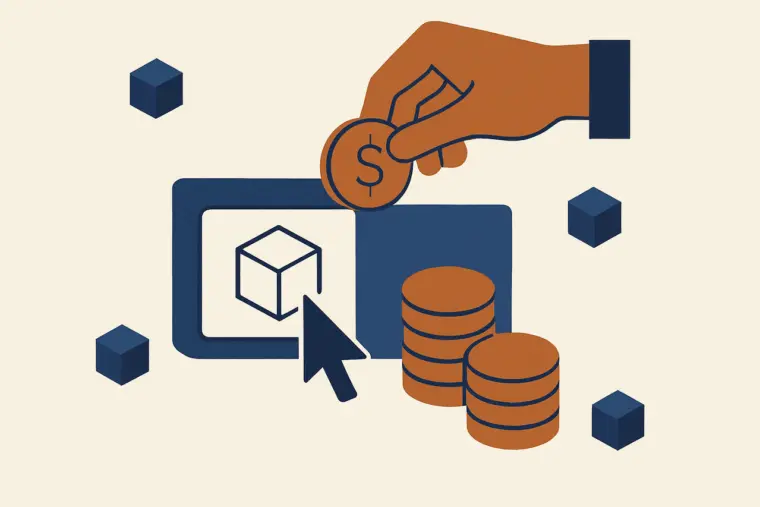
A SPAC, short for special purpose acquisition company, is a shell company with no business operations that raises money by listing on a stock exchange for one purpose: to find a real, private company and merge with it, thereby taking that company public. Investors buy in before the target is known, which is why a SPAC is often called a blank-check company.
Put simply, a SPAC reverses the usual order of going public. Instead of a business raising money on the market, an empty company raises the money first and then goes shopping for a business to bring aboard.
What is a SPAC, in plain terms?
A SPAC is a company that exists only as a pot of money and a promise. When it is created, it has no products, no customers, and no operations; its sole plan is to acquire an existing private company at some point in the future.
It is set up by organizers known as sponsors, typically experienced investors or executives. They list the SPAC on a stock exchange, raise cash from public investors, and then search for a suitable business to merge with. Because investors are backing the sponsors’ judgment rather than a known target, trust in the sponsors is central to the whole arrangement.
How does a SPAC work, step by step?
A SPAC works in a clear sequence: raise money, hold it safely, find a target, and merge. First, the SPAC conducts an initial public offering (IPO) of its own shares, selling stock to raise a large pool of cash even though it has no business yet.
Second, that cash is placed in a trust account, usually invested in safe, short-term instruments, where it sits untouched while the search goes on. Third, the sponsors identify a private company they want to acquire and negotiate a deal. Fourth, the two combine in a merger that makes the private company public. Throughout, the money stays protected in trust until a deal actually closes or the SPAC is wound up.
What is the de-SPAC transaction?
The de-SPAC transaction is the merger in which the SPAC combines with its chosen private company, and it is the moment the whole structure exists to reach. It is also called the business combination.
Once the deal is approved and completed, the private company effectively becomes a publicly traded company, usually adopting its own name and trading under a new ticker symbol. The cash held in trust is released to fund the deal and support the newly public business. In effect, the target has gone public by merging into an already-listed shell rather than running its own IPO.
What are redemption rights and the deadline?
SPAC investors are protected by two important features: redemption rights and a time limit. Redemption rights let investors reclaim their share of the trust, typically with interest, if they do not want to be part of the proposed merger. They can vote on or react to the announced target and, if unconvinced, take their money back instead of holding shares in the merged company.
A SPAC also operates under a deadline, commonly around two years, to complete a merger. If the sponsors fail to close a deal within that window, the SPAC is usually liquidated and the money in trust is returned to investors. These features are designed to limit the risk of handing money over before the target is known.
How does a SPAC differ from a traditional IPO?
Both a SPAC and a traditional IPO end with a company trading on a public market, but they get there in opposite ways. In a traditional IPO, an operating company sells its own shares directly to the public. In a SPAC, an empty company raises the money first and later merges with the business that ends up public.
| Feature | SPAC | Traditional IPO |
|---|---|---|
| What lists first | An empty shell company | The operating business itself |
| Known target | Unknown at the time of listing | The company is known upfront |
| How it goes public | By merging with the SPAC | By selling its own new shares |
| Timeline | Often faster to complete the merger | Can be a longer, more involved process |
| Investor protection | Money in trust; redemption rights | Standard IPO disclosures and pricing |
Supporters say the SPAC route can offer a target company more speed and more certainty over price and terms. Critics note that it can be costly and that the quality of deals depends heavily on the sponsors.
What do sponsors get out of it?
Sponsors organize and promote the SPAC, and in return they typically receive a sizable stake in the company, often referred to as the sponsor’s promote, at a very low cost. This can amount to a meaningful share of the equity once a deal closes.
That arrangement rewards sponsors handsomely if they complete a merger, but it also creates a potential conflict: because sponsors generally benefit only if a deal happens, they may be tempted to push a merger through before the deadline even when the target is not ideal. This is one reason investors are urged to scrutinize the sponsors and the terms.
Why did SPACs become so popular?
SPACs became prominent because they offered companies an alternative, sometimes faster, path to public markets and gave investors a way to participate in deals earlier. For a target company, merging with a SPAC can mean a quicker route to a listing and more direct negotiation over valuation than a standard IPO.
Popularity has risen and fallen over time, and the structure has drawn increased regulatory attention aimed at improving disclosure and protecting investors. As with any investment, the outcome depends heavily on the specific deal and the people behind it.
What are the risks of investing in a SPAC?
Investing in a SPAC carries risks that differ from those of buying an established public company. The most basic is uncertainty: at the time of the listing, investors do not know which company the SPAC will buy, so they are trusting the sponsors to find and negotiate a good deal.
There is also the risk of dilution, because the sponsors’ low-cost stake and other incentives can reduce the value of ordinary investors’ shares once a merger closes. The compressed process can mean less scrutiny of the target than a traditional IPO would involve, and the merged company may perform poorly after going public. Redemption rights and the trust account limit some of this risk before a deal, but once an investor stays in through the merger, the usual risks of owning any stock apply in full.
The bottom line
A SPAC is a blank-check shell company that raises money on the stock market first and then merges with a real business to take it public. Investor cash sits in a trust until the merger, known as the de-SPAC transaction, closes, and investors can usually redeem their shares if they dislike the deal or if no merger happens before the deadline. The key contrast with a traditional IPO is the order of events: a SPAC lists an empty company and finds a business later, while an IPO takes an existing business public directly.
Frequently Asked Questions
Why is a SPAC called a blank-check company?
Because investors hand over money before knowing which company the SPAC will buy, effectively writing a blank check based on trust in the sponsors. The SPAC has no operations of its own at the time of its listing; its only plan is to find a target later.
What happens to investors' money before a merger?
The cash raised in the SPAC's listing is placed in a trust account, typically invested in safe, short-term instruments, and held there until a deal is completed. If no merger happens by the deadline, the money is returned to investors.
What is the de-SPAC transaction?
It is the merger in which the SPAC combines with its chosen private company, turning that company into a publicly traded one. After the de-SPAC, the combined business usually takes on the target's name and trades under a new ticker.
Can investors get their money back if they dislike the deal?
Yes. SPAC investors generally have redemption rights, meaning they can choose to return their shares and reclaim their share of the trust, plus interest, rather than remain invested in the merged company they do not want to own.
What happens if a SPAC never finds a company to buy?
SPACs typically operate under a deadline, often about two years. If no merger is completed in that window, the SPAC is usually liquidated and the money in trust is returned to investors.