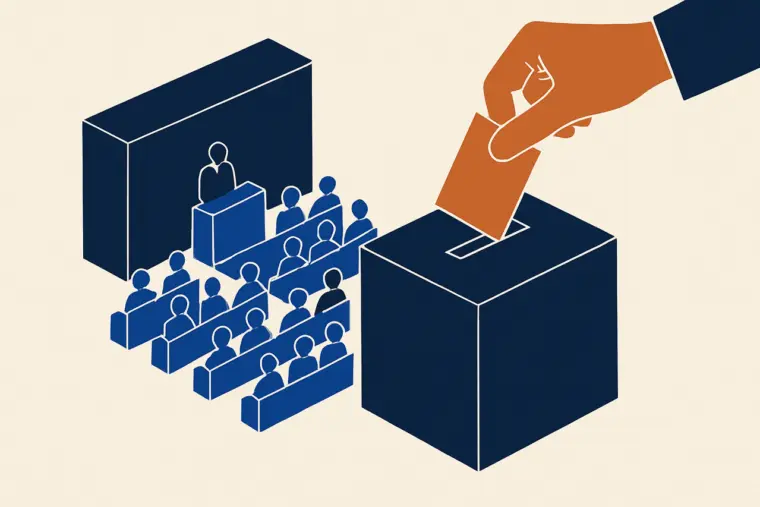
A referendum is a direct vote in which an entire electorate is invited to accept or reject a particular proposal, rather than to choose between competing candidates or parties. It is one of the main instruments of direct democracy, letting citizens decide a specific question themselves instead of leaving it solely to elected representatives. Referendums are commonly used to approve constitutional amendments, ratify treaties, alter borders, or settle divisive policy questions.
What does a referendum actually decide?
A referendum puts a single, clearly framed question to voters, who usually answer yes or no. The subject is typically a matter of unusual importance or sensitivity: a new constitution, membership of an international body, independence for a territory, or a change to fundamental rights. Because the question is put directly to the people, a referendum result carries a strong claim to democratic legitimacy, which is one reason governments turn to it for decisions that ordinary legislation might struggle to settle.
Not every referendum is legally binding. In some systems the outcome automatically becomes law or amends the constitution; in others the vote is advisory or consultative, meaning that the legislature or government retains the formal power to act on the result. The distinction matters, because an advisory vote can still carry considerable political weight even when it does not, by itself, change the law.
How is a referendum different from a plebiscite?
The words referendum and plebiscite are often used interchangeably, and usage varies from country to country. Reference works generally treat a referendum as a vote on a specific legislative or constitutional text, while a plebiscite is a broader vote on a question of sovereignty or the legitimacy of a government or ruler, such as independence, annexation, or the form of the state. Britannica notes that the term plebiscite is sometimes associated with votes organised by authoritarian regimes seeking to legitimise a course of action already decided.
In everyday political language, however, the two terms overlap heavily, and the label chosen often reflects national tradition rather than a strict legal difference. What matters more than the name is who framed the question, whether the choice is genuine, and whether the result binds those in power.
What are the main types of referendum?
Scholars classify referendums by who initiates them and whether they are required by law. The table below summarises the most widely recognised categories.
| Type | Who initiates it | Typical purpose |
|---|---|---|
| Mandatory (obligatory) | Required automatically by the constitution | Certain changes, such as constitutional amendments, cannot take effect without a public vote |
| Optional (facultative) | Government or legislature | Authorities choose to refer a question to voters, often to secure legitimacy |
| Popular initiative | Citizens gathering signatures | Voters propose a new law or constitutional change from below |
| Popular (abrogative) referendum | Citizens gathering signatures | Voters seek to repeal or challenge a law already passed |
Some countries, such as Switzerland, use several of these mechanisms regularly and hold votes multiple times a year. Others reserve referendums for rare, exceptional questions and may go decades between national votes.
These categories are not mutually exclusive. A single country can combine a mandatory route for constitutional change with an optional route for ordinary policy and a citizen-initiative route that lets voters bypass the legislature entirely. The mix a country chooses reflects its constitutional history and its broader attitude toward how much power should rest directly with the electorate.
Where did referendums come from?
The practice of putting questions directly to voters has deep roots in the traditions of direct democracy, in which citizens participate in decisions rather than delegating them entirely to representatives. Britannica traces direct democracy to early assemblies of citizens, and the modern referendum developed as populations grew too large for everyone to gather in one place. Switzerland became closely associated with the tool during the nineteenth century and continues to use it more intensively than almost any other country.
In many other states, referendums spread as a way to legitimise the founding of new constitutions, the drawing of borders after conflict, or the transfer of powers to and from international bodies. Sub-national governments, such as states, provinces, and cities, also use ballot measures and initiatives to decide local questions, showing that the mechanism operates at several levels of government at once.
How are referendums triggered and worded?
The rules for calling a referendum differ widely. A vote may be required automatically by the constitution, called by the head of state or the legislature, or demanded by citizens who collect a set number of signatures within a fixed period. Some jurisdictions also set a turnout threshold or a supermajority requirement, meaning a proposal passes only if enough voters participate or if it wins more than a simple majority.
The wording of the question is critical and often contested. A leading or ambiguous question can influence the outcome, so many countries assign an independent electoral commission to review or approve the text for clarity and neutrality. Rules on campaign financing, official information, and media access are frequently applied to help ensure a fair contest between the competing sides.
The threshold rules can be as decisive as the question itself. A high turnout requirement can cause a proposal to fail even when most of those who voted supported it, because too few people took part. A supermajority requirement, such as needing two-thirds approval, sets a deliberately high bar for change and is often reserved for the most fundamental decisions. Deciding who is eligible to vote, and whether the diaspora or younger citizens may take part, can also shape the result.
What are the arguments for and against referendums?
Supporters argue that referendums deepen democratic participation, give citizens a direct say on fundamental questions, and confer a legitimacy that purely representative decisions may lack. They can break political deadlock and force a clear resolution on issues that divide legislatures.
Critics counter that complex questions may be reduced to an oversimplified choice, that outcomes can be swayed by well-funded campaigns or short-term emotion, and that majorities may override the interests of minorities. Some political theorists also warn that frequent or poorly designed referendums can undermine representative institutions rather than complement them. Because of these tensions, most democracies use referendums selectively.
Where do referendums fit in a democracy?
Referendums sit at the meeting point of direct and representative democracy. They allow the public to decide specific questions directly, while day-to-day governance remains with elected officials. Their role varies from a routine feature of politics in a few countries to a rare, high-stakes event in most others. Understanding whether a given vote is binding or advisory, how the question was framed, and who was allowed to take part is essential to interpreting what any referendum result actually means.
Sources
Related from Politics
How a Vote of No Confidence Works in a Parliamentary System
In parliamentary democracies, a government survives only as long as the legislature lets it. The confidence vote is the mechanism that makes…

How Economic Sanctions Work as an Instrument of Statecraft
Sanctions have become the default tool of coercive diplomacy — a middle option between a statement and a war. Understanding how they…

How Legislative Redistricting Shapes Who Holds Power
Where the lines of an electoral map are drawn can matter as much as how people vote. Redistricting turns the same distribution…
Get Cubed News in your inbox
Daily premium coverage, free. Independent · Source-cited.